

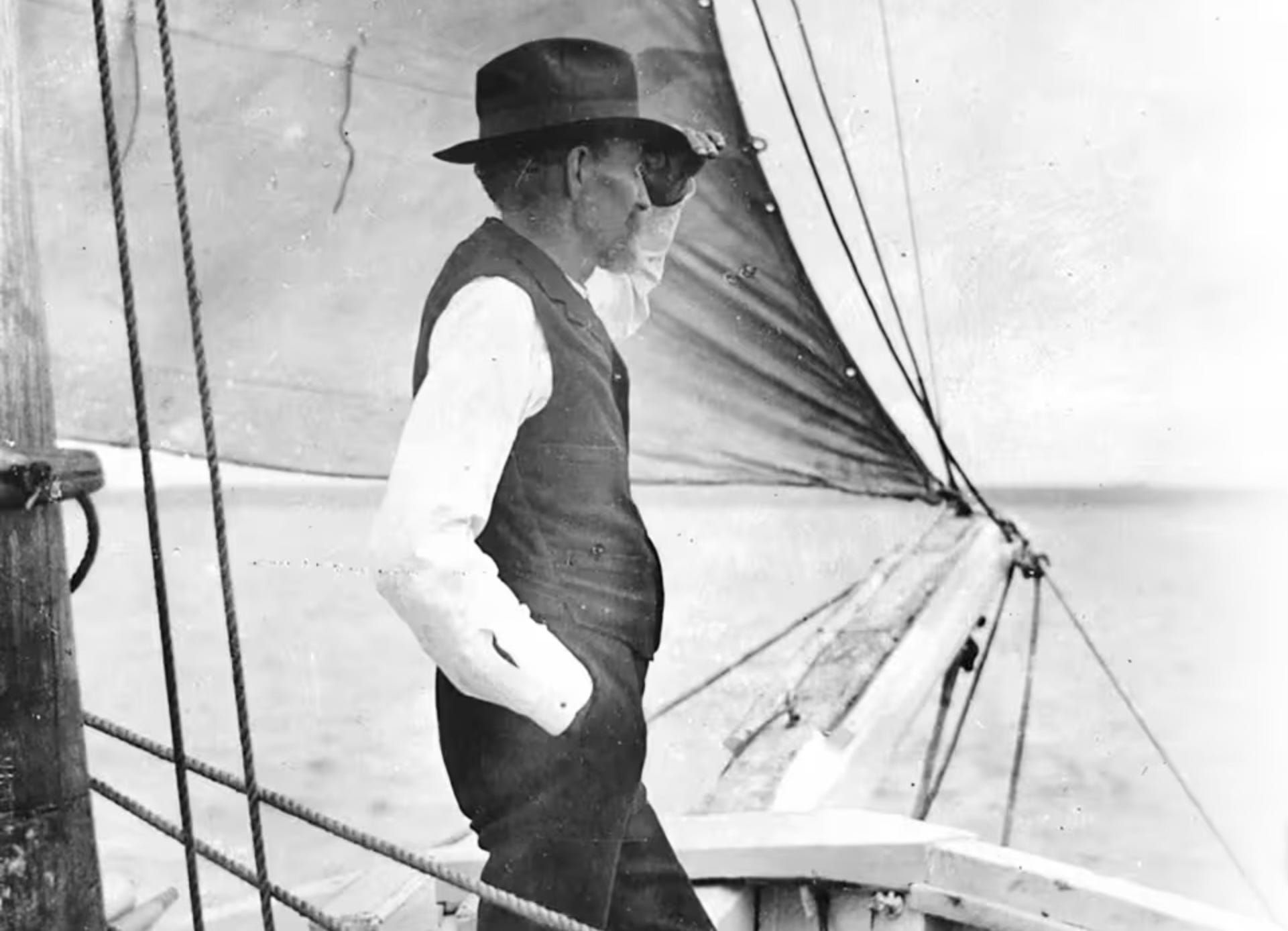
There’s a scene worth an entire novel.
Fairhaven, Massachusetts, 1892. A former captain, fifty years old, no ship, no work, is handed a rotting wreck stranded in a field. An oyster fishing sloop, long abandoned. Anyone else would have seen the end. Joshua Slocum saw the open sea.
He spent his last $553, rebuilt the hull with his own hands over thirteen months, and three years later sailed out of Boston toward history. No GPS. No satellites. No chronometer. Just a battered alarm clock, a chart, and an unshakable faith in the wind.
The Captain the Sea Could Never Break
Long before he became the first man to sail solo around the globe, Slocum was already a man shaped by storms. Born in 1844 in Nova Scotia, he ran away from home at fourteen with nothing but the ambition of the sea. Decades later he was a respected captain on commercial routes across the Atlantic, the Pacific, and the South Seas — a world of towering square-riggers, unruly crews, and impossibly distant ports.
But fate spared him nothing. His wife Virginia died in Buenos Aires in 1884, far from home, on a foreign dock. A mutiny. A shipwreck. And then the final blow: his brigantine Aquidneck ran aground in Brazil and was lost. While anyone else would have quit, Slocum did the only thing he knew how to do: he built a sampan — a hybrid vessel of Eastern design, rugged and sail-driven — the Liberdade, from local timber, and sailed 5,510 miles back to the United States with his family on board.
He wasn’t reckless. He was a sailor in the most ancient sense of the word: a man for whom the ocean was not danger, but natural element. The air he breathed.
“To young men contemplating a voyage I would say go.”
— Joshua Slocum, Sailing Alone Around the World, 1900
The Spray: Thirty-Six Feet Against the World
On April 24, 1895, Slocum left Boston with a dollar and a half in his pocket. That figure has entered sailing mythology in a way no racing budget ever could. Three years, two months, and two days later — June 27, 1898 — he sailed into Newport, Rhode Island, having covered 46,000 miles. The first man in history to circle the globe alone.
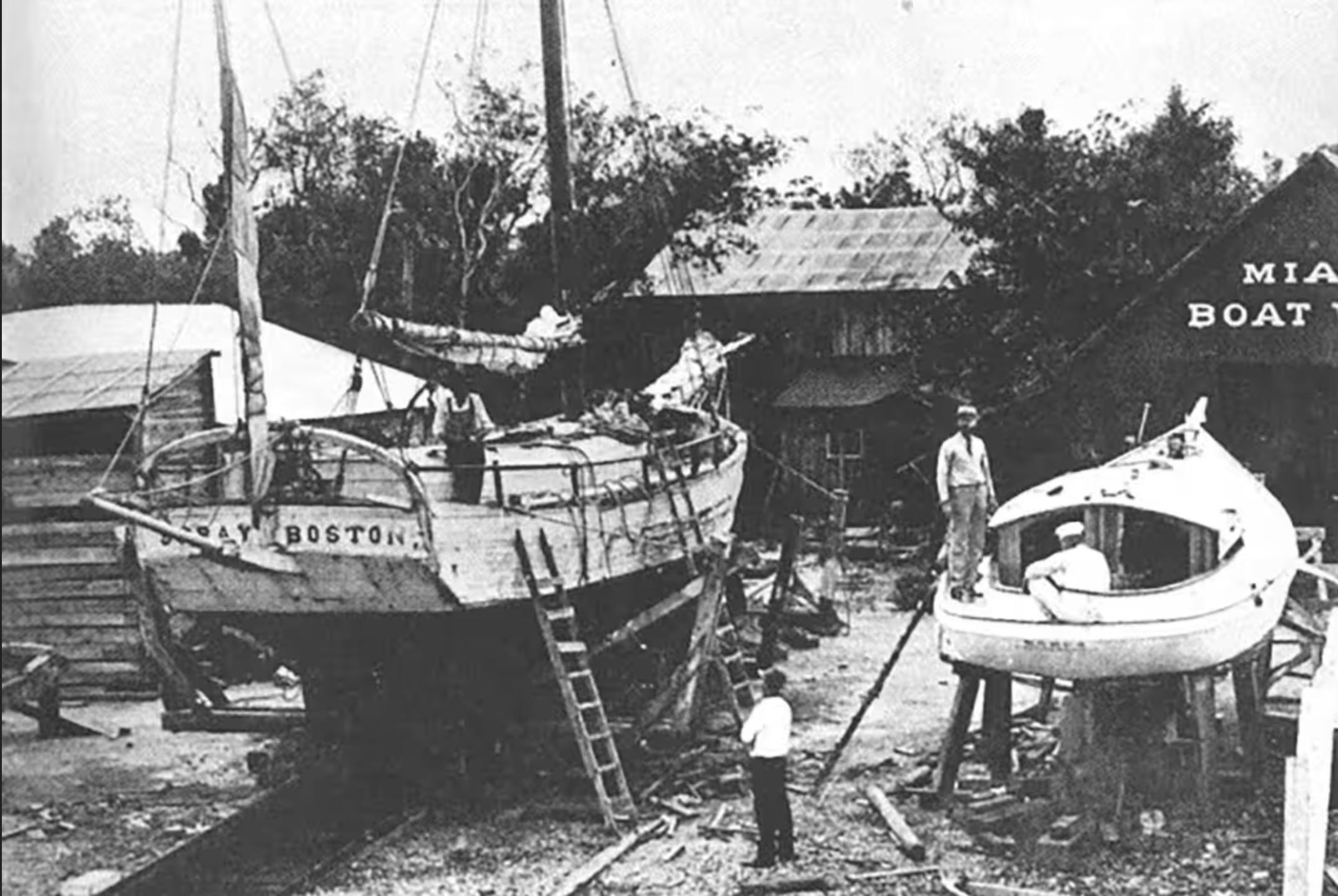
The boat was the Spray: 36 feet 9 inches long, 14 feet 2 inches wide, oak and pine hull rebuilt entirely by hand. Ballast? Three tons of cement in the bilge. Electronics? A four-dollar alarm clock. The route ran through the Strait of Magellan — forty days of furious storms and raids by the indigenous peoples of Tierra del Fuego — then westward across the Pacific, around the Cape of Good Hope, and three Atlantic crossings.
The real technical revolution was self-steering. Slocum had rebalanced the Spray’s centers of effort and resistance until she could hold her course for hours — sometimes days — with no one at the helm. Across the Pacific he covered 2,000 miles without touching the tiller. From Cocos Island to the Caribbean: 2,700 miles in 23 days, with just three hours at the helm in total.
It was proof that a single human being, with the right boat and the right mind, could take on any ocean. The message he sent to future generations — from Moitessier to Tabarly, down to today’s solo sailors — was simple and devastating: the limit is not in the ocean. It’s in the head of whoever is staring at the horizon.
Another man who knew what to do with an ocean and a story. 👇

On November 14, 1909, Joshua Slocum sailed out of Martha’s Vineyard, Massachusetts, bound for the West Indies and then the Amazon, aboard his beloved Spray. No one ever saw him return. The boat was never found. No wreckage, no trace.
What better way to disappear than in open water? What better way to hand your name to eternity than to dissolve into the very element that defined you? Slocum didn’t die: he became legend in the most elegant way possible. No final period. No period at all.
His book — Sailing Alone Around the World, 1900 — is still in print. The Spray has inspired dozens of replicas around the world. His name is engraved on submarines, gliders, and racing yachts. And every time a solo sailor casts off the dock lines, there is something of Slocum in the gesture.
Because he didn’t just sail around the world. He founded the myth. And myths, unlike men, don’t sink.
by Andrea Baracco
(Italian Follows)

Yacht Lounge grows through word of mouth among curious minds. If this story inspired you, share it with those who navigate your same routes.
Stories like this are the heartbeat of Yacht Lounge. If you value this level of insight, join our 3,800 active readers to receive weekly perspectives you won’t find anywhere else.
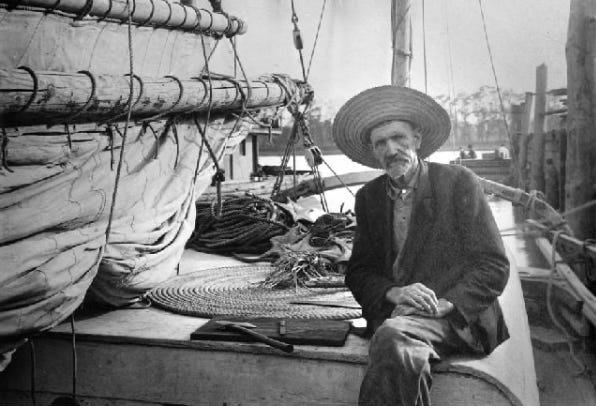
1,50 Dollari per l’Eternità.
C’è una scena che vale un romanzo intero.
Fairhaven, Massachusetts, 1892. Un ex capitano di cinquant’anni, senza nave né lavoro, riceve in dono un relitto marcio arenato su un prato. Uno sloop da pesca alle ostriche, abbandonato. Un’altra persona avrebbe visto la fine. Joshua Slocum vide il largo.
Spese i suoi ultimi 553 dollari, ricostruì lo scafo con le sue mani in tredici mesi, e tre anni dopo salpò da Boston verso la storia. Senza GPS. Senza satelliti. Senza cronometro. Con una sveglia arrugginita, una mappa e un’incrollabile fede nel vento.
Il Capitano che il Mare Non Riusciva a Domare
Prima che diventasse il primo solitario a circumnavigare il globo, Slocum era già un uomo costruito dalle tempeste. Nato nel 1844 in Nuova Scozia, fuggì di casa a quattordici anni con la sola ambizione del mare. Decenni dopo era capitano stimato sulle rotte commerciali dell’Atlantico, del Pacifico e dei mari del Sud, un mondo di velieri enormi, equipaggi indisciplinati, porti lontanissimi.
Ma il destino non gli risparmiò nulla. La moglie Virginia morì a Buenos Aires nel 1884, lontana da casa, su una banchina straniera. Un ammutinamento. Un naufragio. E poi il colpo finale: il suo brigantino Aquidneck s’incagliò in Brasile e restò perduto. Mentre chiunque altro si sarebbe arreso, Slocum fece l’unica cosa che sapeva fare: costruì una sampana, un’imbarcazione ibrida di ispirazione orientale, robusta e a vela: la Liberdade con legni locali e navigò 5.510 miglia fino agli Stati Uniti con la famiglia a bordo.
Non era un folle. Era un marinaio nel senso più arcaico del termine: uno per cui l’oceano non era pericolo, ma elemento naturale. L’aria per respirare.
“To young men contemplating a voyage I would say go.”
Joshua Slocum, Sailing Alone Around the World, 1900
Lo Spray: Undici Metri contro il Mondo
Il 24 aprile 1895 Slocum lasciò Boston con un dollaro e cinquanta in tasca. Quella cifra è entrata nella mitologia velica come nessun budget di regata mai potrà fare. Tre anni, due mesi e due giorni dopo — il 27 giugno 1898 — entrava a Newport, Rhode Island, avendo percorso 46.000 miglia. Primo uomo nella storia a fare il giro del mondo da solo.
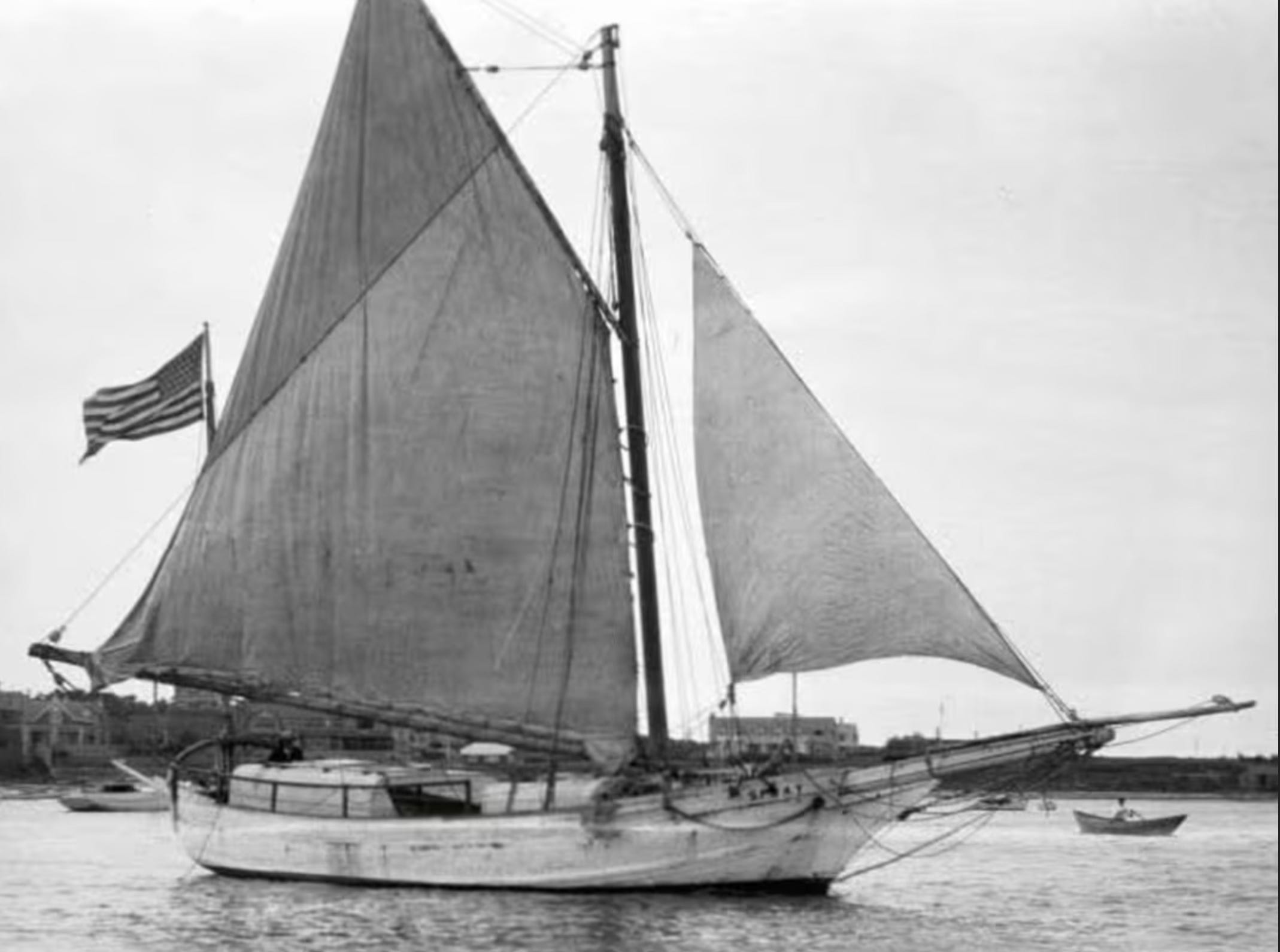
La barca era lo Spray: 11,20 metri di lunghezza, 4,32 di larghezza, scafo in quercia e pino ricostruito interamente a mano. Zavorra? Tremila chili di cemento in stiva. Elettronica di bordo? Una sveglia da quattro dollari. Il percorso passò dallo Stretto di Magellano: quaranta giorni tra tempeste furiose e incursioni degli indigeni della Terra del Fuoco e poi verso ovest attraverso il Pacifico, il Capo di Buona Speranza, tre traversate atlantiche.
La vera rivoluzione tecnica era l’autogoverno. Slocum aveva modificato l’equilibrio dei centri di forza dello Spray fino a renderlo capace di navigare da solo per ore, a volte per giorni, senza nessuno al timone. Nel Pacifico percorse 2.000 miglia senza toccare la barra. Dall’Isola Cocos fino ai Caraibi: 2.700 miglia in 23 giorni, con solo tre ore al timone in totale.
Era la dimostrazione che un singolo essere umano, con la barca giusta e la testa giusta, poteva sfidare qualunque oceano. Il messaggio che lanciò alle generazioni future — da Moitessier a Tabarly, fino ai solitari di oggi — era semplice e devastante: il limite non è nell’oceano. È nella testa di chi guarda l’orizzonte.
Un altro uomo che sapeva cosa fare con un oceano e una storia da raccontare. 👇

Il 14 novembre 1909 Joshua Slocum salpò da Martha’s Vineyard, Massachusetts, verso le Indie Occidentali e poi l’Amazzonia, a bordo del suo amato Spray. Nessuno lo vide mai più tornare. La barca non fu mai ritrovata. Nessun relitto, nessuna traccia.
Come scomparire al meglio, se non in mare aperto? Come consegnare il proprio nome all’eternità, se non dissolvendosi nell’elemento che ti ha definito? Slocum non morì: si trasformò in leggenda nel modo più elegante possibile. Senza punto finale. Senza punto.
Il suo libro, Sailing Alone Around the World, redatto nel 1900 è ancora in stampa. Lo Spray ha generato decine di repliche in tutto il mondo. Il suo nome è inciso su sottomarini, alianti e yacht da corsa. E ogni volta che un solitario lascia la banchina, c’è qualcosa di Slocum nel gesto.
Perché lui non ha solo circumnavigato il globo. Ha fondato il mito. E i miti, a differenza degli uomini, non affondano.
by Andrea Baracco

Yacht Lounge cresce grazie al passaparola tra menti curiose. Se questo articolo ti ha ispirato, condividilo con un amico.
Storie come questa sono il cuore di Yacht Lounge. Se apprezzi questo tipo di narrazione, unisciti ai nostri 3.800 lettori attivi per ricevere ogni settimana approfondimenti che non troverai altrove.