

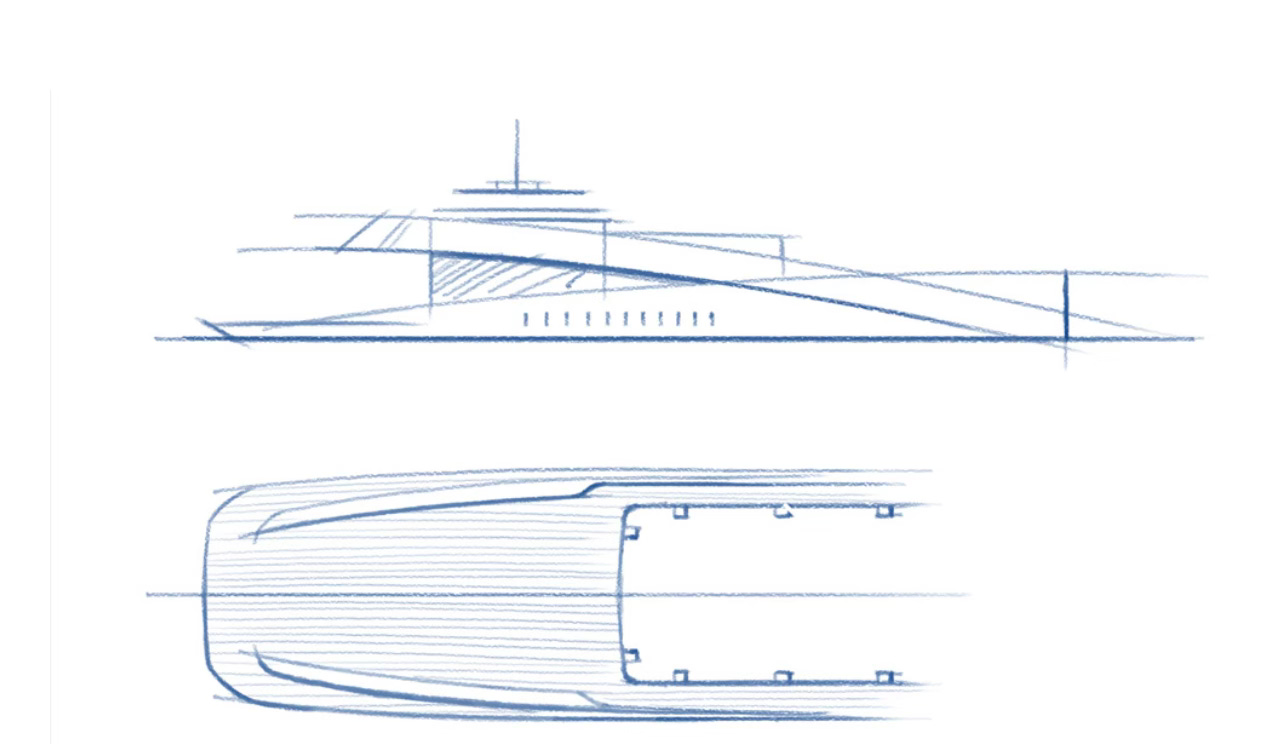
There’s a moment, every year, when nautical design stops presenting itself as an exercise in style and returns to what it should be: a cultural responsibility. The Blue Design Summit is precisely that moment. Not a salon, not a self‑celebratory ritual. Rather, a place where the industry looks at itself in the mirror without filters — and discovers that the reflection isn’t always the one it hoped for.
La Spezia becomes an open‑air laboratory: shipyards, designers, institutions, students, industrial clusters. All sitting at the same table, but not to repeat the usual keywords — sustainability, innovation, future — now worn out like sun‑bleached shells. The point here is something else: to understand whether nautical design still has the courage to imagine.
Design as a political act (even when it doesn’t want to be)
In the world of yachting, design is often treated as an aesthetic accessory. At the Blu Design Summit, its more uncomfortable nature emerges: that of a political act, capable of influencing supply chains, territories, coastal economies, production models. It’s no coincidence that the Miglio Blu has become a district observed at the European level: this is where experimentation happens, mistakes happen, redesign happens. And in the nautical sector, that is almost revolutionary.
Between visions and contradictions
The Summit stages a clear tension: on one side, the rhetoric of sustainability; on the other, the reality of an industry built on complex materials, global supply chains, and private desires. It’s precisely in this friction that the event’s value is born. Not because it solves anything, but because it exposes. And when a sector exposes its contradictions, it means it’s ready to grow.
Bannenberg understood it first: a yacht can be a language. 👇

Creativity as infrastructure
The Blu Design Summit reminds everyone that creativity is not a whim, but a strategic infrastructure. It helps rethink interiors, of course. But above all, it helps rethink the very meaning of navigating: new materials, new processes, new relationships between sea and city, between industry and culture, between technology and desire.
In a landscape often dominated by polished narratives, the Summit brings nautical design back to its most authentic dimension: the one that doesn’t decorate, but interprets. The one that doesn’t soothe, but orients. The one that doesn’t follow the route, but draws it.
by Andrea Baracco
(Italian Follows)

To explore the visions, themes and key voices of the Blu Design Summit, discover more here 👉 www.bluedesignsummit.it
Osare.
C’è un momento, ogni anno, in cui il design nautico smette di raccontarsi come un esercizio di stile e torna a essere ciò che dovrebbe: una responsabilità culturale. Il Blue Design Summit è esattamente quel momento. Non un salotto, non un rituale autocelebrativo. Piuttosto, un luogo dove il settore si guarda allo specchio senza filtri — e scopre che l’immagine riflessa non è sempre quella che vorrebbe.
La Spezia diventa un laboratorio a cielo aperto: cantieri, designer, istituzioni, studenti, cluster industriali. Tutti seduti allo stesso tavolo, ma non per ripetere le solite parole chiave — sostenibilità, innovazione, futuro — ormai consumate come conchiglie sbiancate dal sole. Qui il punto è un altro: capire se il design nautico ha ancora il coraggio di immaginare.
Il design come atto politico (anche quando non vuole esserlo)
Nel mondo dello yachting, il design è spesso trattato come un accessorio estetico. Al Blu Design Summit, invece, emerge la sua natura più scomoda: quella di atto politico, capace di influenzare filiere, territori, economie costiere, modelli produttivi. Non è un caso che il Miglio Blu sia diventato un distretto osservato a livello europeo: qui si sperimenta, si sbaglia, si riprogetta. E questo, nel settore nautico, è quasi rivoluzionario.
Tra visioni e contraddizioni
Il Summit mette in scena una tensione evidente: da un lato la retorica della sostenibilità, dall’altro la realtà di un’industria che vive di materiali complessi, supply chain globali e desideri privati. È proprio in questa frizione che nasce il valore dell’evento. Non perché risolve, ma perché espone. E quando un settore espone le proprie contraddizioni, significa che è pronto a crescere.
Bannenberg lo aveva capito per primo: lo yacht può essere un linguaggio. 👇
La creatività come infrastruttura
Il Blu Design Summit ricorda che la creatività non è un vezzo, ma un’infrastruttura strategica. Serve per ripensare gli interni, certo. Ma serve soprattutto per ripensare il senso stesso di navigare: materiali nuovi, processi nuovi, relazioni nuove tra mare e città, tra industria e cultura, tra tecnologia e desiderio.
In un panorama spesso dominato da narrazioni patinate, il Summit riporta il design nautico alla sua dimensione più autentica: quella che non decora, ma interpreta. Quella che non consola, ma orienta. Quella che non segue la rotta, ma la disegna.
by Andrea Baracco

Per approfondire visioni, temi e protagonisti del Blu Design Summit, trovate tutto qui 👇 www.bluedesignsummit.it