

🇺🇸🇮🇹 Bilingual content: English first, Italian follows
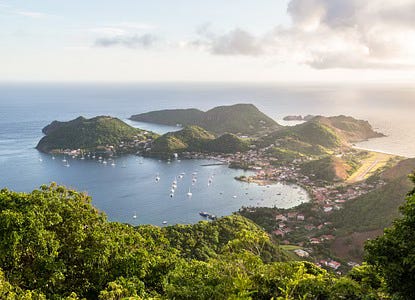
Having fortunately salvaged the CS&RB II Busnelli thanks to Ciri’s passion for reading, we set course for Guadeloupe, the butterfly-shaped French island dominated by the extinct volcano La Soufrière, which rises to almost 1,500 meters.
Guadeloupe is the largest island in the Lesser Antilles, consisting of two islands separated only by a narrow natural channel, the so-called Rivière Salée, a 3-mile-long stretch of sea with a maximum width of 200 meters, spanned by three movable road bridges. The western island, where the volcano stands, is curiously called Basse-Terre, where banana plantations are widespread, and the eastern island, entirely flat and mainly cultivated with sugar cane, is called Grande-Terre.
Reached in early November 1493 by Christopher Columbus, who on his second voyage discovered Marie-Galante, the island now producing rum, and finally Karukera, as the island was called by the Caribe Indians who inhabited it, to which he gave the name Guadeloupe, after the Spanish monastery of Nuestra Señora de Guadalupe, located in the Extremadura region.
The approach to the capital, Pointe-à-Pitre, requires great caution due to the presence of exposed rocks and shallow, semi-submerged waters. Sailing relatively close-hauled for 45 miles in 20–25 knots of wind requires a reef, jib 1, and a forestay, requiring a couple of tacks, but is not demanding. After passing the small archipelago of Les Saintes, consisting of nine islands, two of which are inhabited, Terre-de-Haut and Terre-de-Bas, we enter the maze of rocks that protect the port of Ponte-à-Pitre. Paolo, worried about navigation, goes down to get the nautical chart. A chorus of shouts rises from the other male crew members: “Bring it immediately below on the chart table, or if it flies away, we’re done for!” Paolo reacts by placing a whinch handle on the chart, but an opposing wave tilts the boat and causes it to slide away. The wind does the rest, sending the chart flying into the sea. A disapproving silence falls on deck. Paolo, consumed by guilt, wordlessly dives into the sea to retrieve it. The Venetians say “the tacòn (patch) is worse than the hole.” (the remedy is worse than the disease). In fact, now we have to retrieve him. Tack, lower the mainsail and jib, start the engine. “You always have to keep an eye on him,” says the skipper dejectedly. After a few maneuvers through the high, breaking waves of “la passe,” (the passage) the channel separating Guadeloupe from Dominica, we pick up Paolo, who’s coming on board with a macerated pulp of what was our only detailed chart of the island. With a good eye, a little imagination, and a bit of luck, we dock at the Ponte-à-Pitre pier.
The island, French since 1674, bounced back into English hands in the 18th century, and after a rapidly dashed prospect of passing to Sweden, finally returned to French possession in 1816, forming the Département d’Outremer with Martinique, Saint Barthelemy, and Saint Martin. French is spoken, everything is French, including baguettes, croissants, and champagne, and payments are in French francs (today in euros). All the major supermarket chains, from Carrefour to Casino, are there, and shopping is like a homecoming. A thirst for tourism leads us to rent a van to reach the slopes of the volcano in Basse-Terre and breathe in the scents of the rainforest, filled with majestic trees, plants with immense leaves, traveler’s trees, cocoa trees, vines, and hundreds of waterfalls.
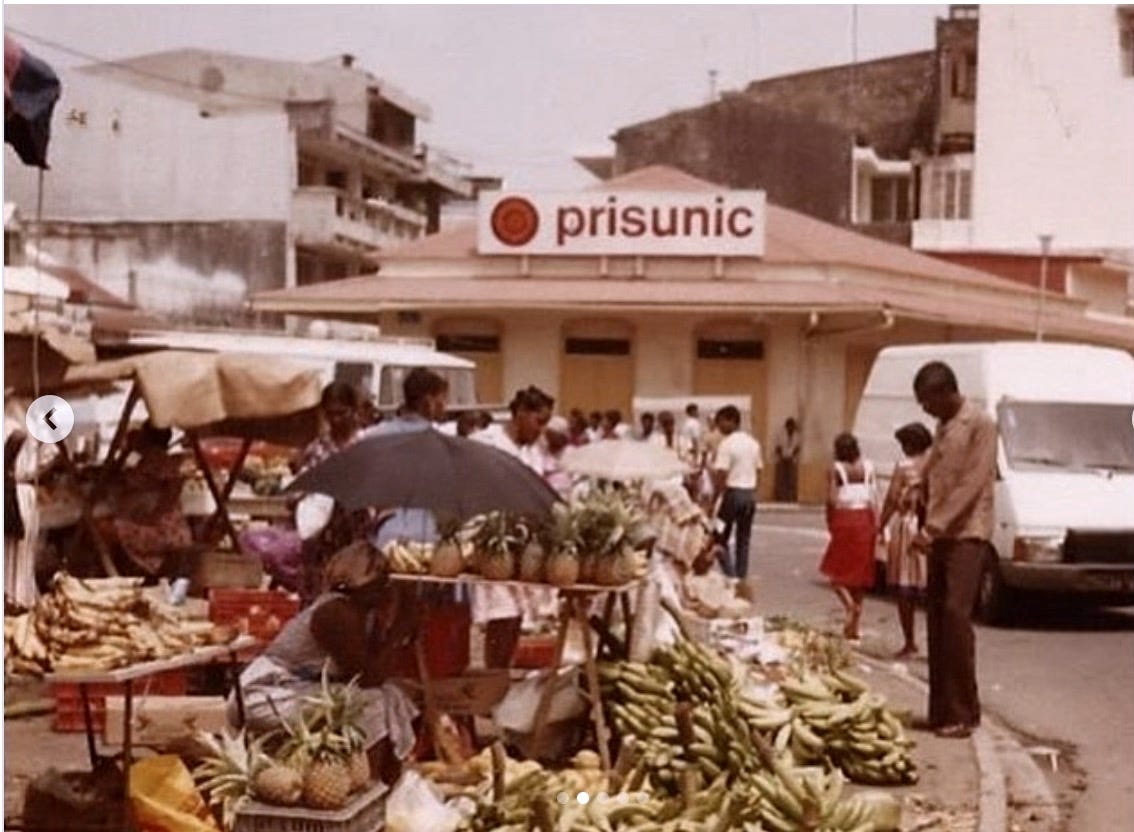
We stop for a snack at a shack on the edge of the forest, curious to try some Creole specialties. A mixed platter arrives with a corn cob, some mysterious vegetables, a piece of polenta—yes, polenta—and a curious pink disk with two holes. It looks like a large button. It’s actually a pig’s nose, considered an absolute delicacy here. Soft, tender, and tasty, it’s utterly disgusting to children, who haven’t yet reached the age of experimentation and are still clinging to hamburgers. Visiting the supermarkets, we discover shelves full of vacuum-packed bags containing thousands of pig noses.
Due to the high humidity, the volcano’s summit is constantly cloaked in a dark cloud that periodically dumps buckets of water on the lush rainforest plants, including us. An unexpected shower of warm water.
Subscribe to Yacht Lounge – it’s free. One click and you’ll discover a world of authentic stories, beyond the ordinary.
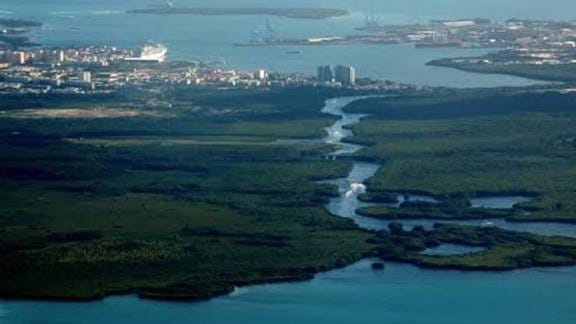
After leaving the forest and its broadleaf trees behind, we decide to venture into the Rivière Salée, to avoid circumnavigating Basse-Terre to reach the island of Antigua. We have to get up early, because the drawbridges only open at limited times, before the morning traffic starts. After crossing the bridges, we proceed with the engine idling in what feels more like a canal, lined with lush vegetation and a muddy bottom of uncertain depth. This causes the depth sounder to continually sound, but it doesn’t prevent us from frequently touching the bottom. Fortunately, this was without consequences, except for some slowdowns. However, these were less time-consuming than the circumnavigation, which, being downwind of the volcano, would have offered little or no wind.
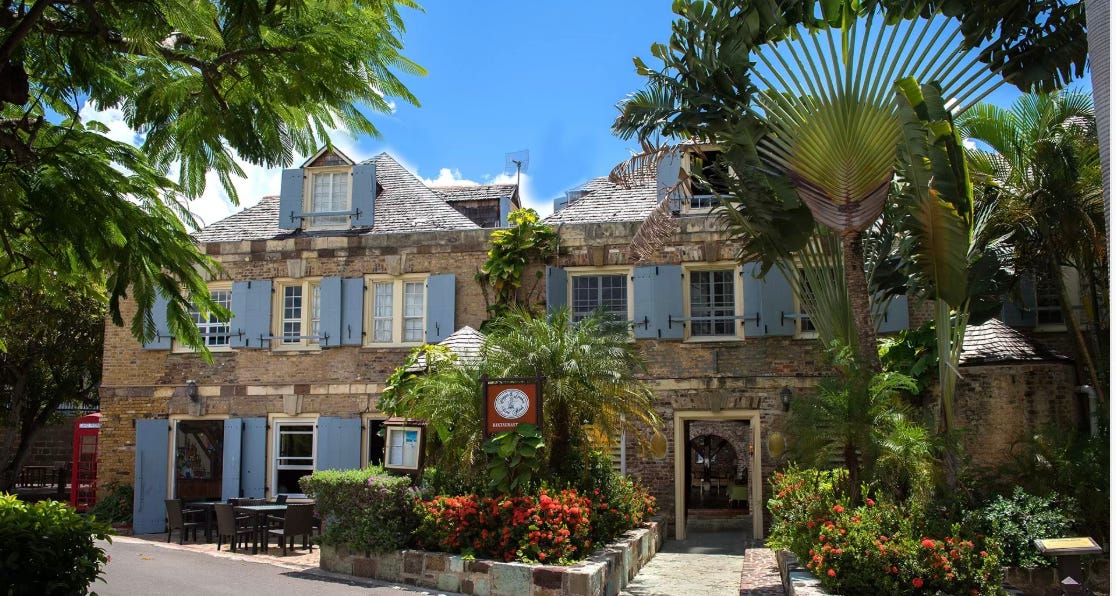
Antigua was also a volcano, which imploded a few millennia ago, reducing the island’s elevation to just 400 meters. Rainfall is therefore limited, and there is no rainforest, but rather plantations of cotton and the famous Antiguan black pineapple, a species cultivated since the 1300s by the Arawak people, the island’s second largest inhabitants until the 1500s, when they gave way to the more warlike Caribs, who violently expelled them. They were in turn exterminated by the English, who took possession of the island in 1632. The hilly landscape left by the ancient imploded volcano, and the milder and more stable climate than the mountainous islands, convinced Sir Christopher Codrington to establish a vast plantation and to use the nearby, sandy and completely flat island of Barbuda to grow supplies for the plantation. Lord Horatio Nelson exploited the rugged coastline, which offered an extremely sheltered bay on its southern side—a hurricane hole—perfect for protecting His Majesty’s ships from the fury of tropical hurricanes. Thus, in the 18th century, the Royal Navy established a base in the two bays, now renamed English Harbour, and Nelson’s Dockyard, in particular, provided an ideal base for support, maintenance, and refuge. Nelson hated Antigua, preferring the verdant island of Montserrat, where his wife Frances Nisbet’s family owned a plantation. Today, Nelson’s Dockyard is a highly attractive tourist destination and a preferred mooring for a small number of yachts that moor at that quay, which still contains the aged capstans and where the sterns of the admiral’s ships were lined up.
After sailing on course 340 miles for 45 miles upwind, we cast the stern lines to that historic pier. Subtly restored 18th-century buildings boast charming names like the Copper and Lumber Inn and the Admiral’s Inn, where you can sip a Jamaican Red Stripe beer or a more flavorful Planter’s Punch made with tropical fruit juices and rum.
Antigua has long been the yachting capital of the Caribbean. The Nicholson family, unrelated to the famous Camper & Nicholsons shipyard and broker, arrived here in the 1950s after a transatlantic crossing. They settled there and created a vibrant community of yachtsmen who made the island their home and, in 1968, even organized Antigua Week, a week of regattas around the island that has attracted enthusiasts from all over the world.
Our unstoppable curiosity for the island’s interior drives Ciri, Carla Daniela, and I to venture further afield to the capital, Saint John. We get a ride in an Antiguan pickup truck, or rather, in the back of the pickup truck, hair in the wind, body in the dust, because the road is unpaved. The town is lively, cheerful, and offers shops selling T-shirts, which inexplicably are the island’s specialty. They are very imaginative, dedicated to the Rasta culture, which abounds on the island. The term Rastafarian derives from Ras Tafari, the name given at birth to Emperor Haile Selassie, meaning “Power of the Trinity,” who ascended to the throne of Ethiopia in 1930. Rastafarianism is Afrocentric and focuses on the African diaspora, which it believes is oppressed by Western society, or “Babylon.” Many Rastas demand this diaspora’s resettlement in Africa, a continent they consider the Promised Land, or “Zion.” Rastas are gentle, skilled growers, nature lovers, and heavy marijuana smokers.
Listen to the podcast 👇

After yet another Red Stripe and tenth Piña Colada—a blend of pineapple juice, coconut milk, and rum—at the Admiral’s Inn, the skipper wants to explore the windward side of the island, where Nonsuch Bay opens up, a deep inlet protected by an extensive reef. Another sheltered, windward mooring, like in the Tobago Cays. We set sail and motor toward Green Island, a remarkable landmark for the entrance to the bay and the protection of the narrow, deep access channel. The bay is spectacular, breezy, with barely a ripple. We are alone, surrounded by gentle green shores and turquoise waters. Exactly twenty years later, I would return to that very bay to build a marina in a hurricane hole opening north of the bay, renamed Emerald Cove, and spend two years living in the village of Willikies in Antigua. But that’s another story...
The skipper is satisfied, dons his double tank, which we fill with a compressor located in the aft locker, and sets off in search of fish or lobsters, isolating himself in the silence of the Caribbean waters, a refuge from his forced solitude. “What did you catch today?” “A lot of cold...”, since he’s not wearing a wetsuit, and after an hour in the water, you feel cold even in the Caribbean Sea.
A 30-mile journey on course 350 take us to Barbuda, white sand flat island, where at Coco Point, the southernmost tip, an American couple opened a super-exclusive hotel in 1947, the Coco Point Lodge. Fashion designer Mariuccia Mandelli, aka Krizia, was turned down for a reservation and decided to open her exclusive resort on the island, which she called the K Club, much loved by Princess Diana. But in 1995, a Force 5 hurricane, called Luis, with gusts of 150 knots, devastated it. I was there and... but that’s another story, and I’ll tell you about it at the end of this series.
Barbuda offers a fascinating nature excursion to Codrington Lagoon, famous for hosting one of the world’s largest colonies of frigate birds, a seabird also known as the “pirate of the sea.”
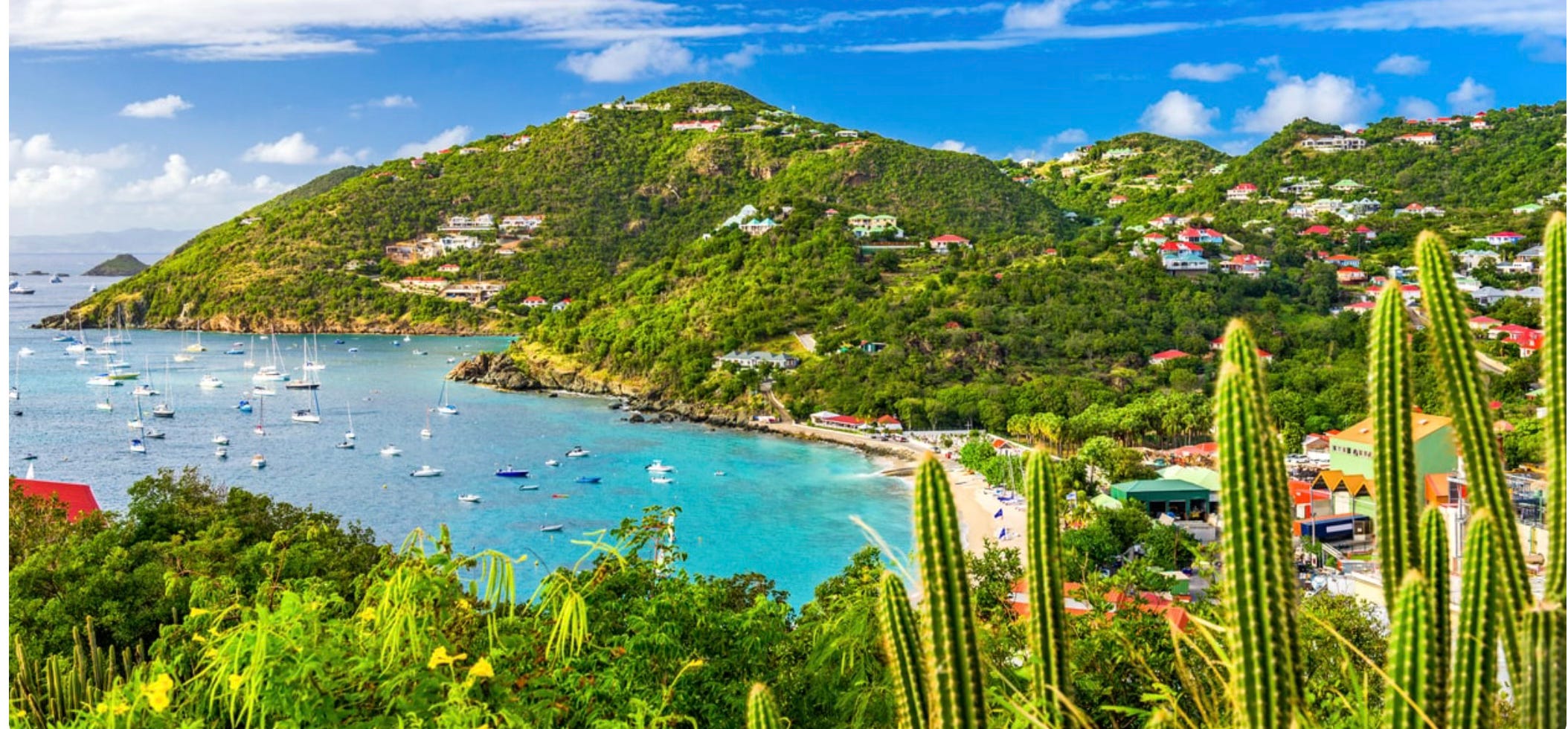
The next stop is Saint Barthelemy, considered the most exclusive of the Lesser Antilles. 57 miles on course 285, finally a reaching passage, and the CS&RB II Busnelli unleashes its full potential, with a big Genoa, forestay, fisherman, and full mainsail, cruising at 10–12 knots, riding the waves. Less than six hours later, we’re moored in the charming rectangular harbor of Gustavia. French since 1648, in one of those curious exchanges that reigned between the 17th and 19th centuries, the island was ceded to Sweden in 1784 in exchange for certain trading rights in the port of Gothenburg. This change of control brought progress and prosperity, with the Swedes making Gustavia, the town dedicated to King Gustav III, a free port, facilitating the trade of goods, including smuggling, for Europeans. The Caribbean, as we know, has always been a pirate-filled place. Sweden ruled it for almost a century, until, following a plebiscite held in 1877, it sold it back to France.
Today, the entire population is white, and the island has become a hub for luxury charters. In 1995, the prestigious and exclusive Bucket Regatta landed on Saint Barthelemy, which has since been simplified to Saint Barth, a more intimate and friendlier name, hosting mega-sailors, including many Perini Navi yachts.
In 1975, everything was simpler and less crowded. In Corossol, a fishing village with immaculately painted houses, grandmothers still wear the Saintonge or Charentes bonnet, which the English had mockingly called “Kiss me not,” becoming “quichenotte.”
CS&RB II Busnelli is moored on the short side of the quay next to a canot breton, a traditional Breton fishing boat, owned by a former submariner of the French navy, tired of staying indoors at 100 meters under water risking his life, and his delightful young wife of Tahitian origins. The youngest crew member on board is Philippe, three years old, agile as a monkey, who climbs over railings, stanchions, and life lines all by himself and comes to visit us. We offer him a cookie. We’ll never get rid of him. At 7 a.m., Daniela and I see him leaning against the skylight of our cabin, waiting for the cookie. The little family is wandering around at random, adventurously, representatives of that seventh continent of navigators and ocean dwellers aboard whatever vessel. As long as it floats. We’ve been in Saint Barth for a week waiting for a deposit to replenish the boat’s now-emptied coffers and the crew’s pockets. The skipper is impatient. By the second day ashore, he can’t take it anymore. Finally, the money has arrived and the bow of CS&RB II Busnelli can finally point towards Cuba and stay at sea for over 1,000 miles on a 280, course, trade winds in favor, to the great joy of the skipper.
by Roberto Franzoni
(English translation and editing: Elena Paxia)
✦ To be continued in the next episode…

Enjoyed this novel? Share it with someone who would love it too!
CS&RB II - I Caraibi. Le Isole Sottovento.
Recuperato fortunosamente il CS&RB II Busnelli grazie alla passione per la lettura di Ciri, con prua 355 ci dirigiamo verso Guadalupa, l’isola francese a forma di farfalla, dominata dal vulcano spento La Soufrière che si eleva fino a quasi 1.500 metri.
Guadalupa è l’isola più estesa delle Piccole Antille, formata da due isole separate solo da uno stretto canale naturale, la cosiddetta Rivière Salée, un braccio di mare lungo 3 miglia largo al massimo 200 metri e attraversato da tre ponti stradali mobili. L’isola occidentale dove sorge il vulcano si chiama curiosamente Basse-Terre, dove sono molto estesi i bananeti, e quella orientale, tutta pianeggiante e coltivata prevalentemente a canna da zucchero, Grande-Terre.
Raggiunta all’inizio di novembre del 1493 da Cristoforo Colombo, che al suo secondo viaggio scoprì Marie-Galante, l’isola oggi produttrice di rum e infine Karukera, come era chiamata l’isola dagli indiani Caribe che la abitavano, a cui assegnò il nome di Guadalupa, dal nome del monastero spagnolo di Nuestra Señora de Guadalupe, sito nella regione dell’Estremadura.
L’avvicinamento alla capitale, Pointe-à Pitre richiede molta attenzione per la presenza di scogli affioranti e di bassi fondali semi sommersi. La navigazione di bolina relativamente stretta per 45 miglia con 20 – 25 nodi di vento richiede una mano di terzaroli, il fiocco 1 e la vela di strallo impone un paio di bordi, ma non è impegnativa. Superato il piccolo arcipelago di Les Saintes, composto da nove isolette di cui due abitate, Terre-de-Haut e Terre-de-Bas entriamo nel dedalo di scogli che proteggono il porto di Ponte-à-Pitre. Paolo preoccupato dalla navigazione scende a prendere la carta nautica. Un coro di urla si leva dagli altri maschi dell’equipaggio: “portala subito sotto, che se vola via siamo fregati!” Paolo reagisce mettendo una maniglia di whinch sulla carta, ma un’onda nemica inclina la barca e la fa scivolar via. Il vento fa il resto, facendo volare in mare la carta. Un silenzio di riprovazione cala in coperta. Paolo roso dal senso di colpa senza proferir parola si getta in mare per recuperarla. I veneti dicono “peggio il tacòn del buso”. Infatti ora dobbiamo recuperare lui. Vira, ammaina randa e fiocco, accendi il motore. “Uno lo tenga sempre sott’occhio”, dice sconsolato lo skipper. Dopo un paio di manovre tra le onde alte e frangenti de “la passe”, il canale che separa Guadalupa da Dominica recuperiamo Paolo, che risale con in mano una poltiglia macerata di quella che fu la nostra unica carta dettagliata dell’isola. Con un po’ di occhio, un po’ di fantasia e un po’ di fortuna ormeggiamo al molo di Ponte-à-Pitre.
Iscriviti a Yacht Lounge, è gratuito. Un click ti apre un mondo di racconti autentici, lontani dai soliti schemi.
L’isola francese dal 1674, rimbalzata in mani inglesi nel ‘700 e dopo una prospettiva rapidamente caduta di passare sotto la Svezia, tornò definitivamente in possesso francese nel 1816, costituendo con Martinica, Saint Barthelemy e Saint Martin il Departement d’Outremer. Si parla francese, tutto è francese, comprese le baguettes,i croissantes e lo champagne, si paga in franchi francesi, oggi in euro, e ci sono tutte le catene della grande distribuzione da Carrefour a Casino e fare la spesa è come un ritorno a casa. La voglia di turismo ci fa noleggiare un pulmino per raggiungere le pendici del vulcano a Basse-Terre e odorare i profumi della foresta pluviale, fitta di alberi maestosi, di piante con immense foglie, di alberi del viaggiatore, di alberi di cacao, di liane e di centinaia di cascate.
Ci fermiamo a consumare uno spuntino in un baracchino ai bordi della foresta, curiosi di assaggiare qualche specialità creola. Arrivano dei piatti misti con una pannocchia di mais, delle verdure misteriose, un pezzo di polenta – sì, proprio polenta… – e un curioso dischetto rosa con due buchi. Sembra un bottone di grandi dimensioni. È invece il naso del maiale, considerato qui una prelibatezza assoluta. Morbido, tenero e gustoso, è schifato dai bambini, che non sono ancora entrati nell’età della sperimentazione e rimangono ancorati all’hamburger. Frequentando i supermarket scopriremo che ci sono degli scaffali pieni di buste sottovuoto con migliaia di nasi di maiale.
Per la forte umidità dell’aria la cima del vulcano è sempre ammantata da un nuvolone scuro che scarica di tempo in tempo secchiate d’acqua che innaffiano le rigogliose piante della foresta pluviale e naturalmente anche noi. Una doccia non voluta, di acqua tiepida.
Archiviata la foresta e le sue latifoglie decidiamo di avventurarci nella Rivière Salée, per risparmiare la circumnavigazione di Basse-Terre per raggiungere l’isola di Antigua. Bisogna alzarsi presto, perché i ponti mobili aprono solo in fasce orarie limitate e precedenti il traffico del mattino. Superati i ponti procediamo a motore al minimo in quello che sembra più un canale, bordato di ricca vegetazione e con un fondale fangoso e di incerta profondità, che fa suonare in continuazione l’allarme dell’ecoscandaglio, ma che non ci evita di toccare frequentemente il fondo, per fortuna senza conseguenze, se non dei rallentamenti, che comunque hanno rappresentato un tempo inferiore alla circumnavigazione, che essendo sottovento alla massa del vulcano sarebbe stata con poco o niente vento.
Anche Antigua era un vulcano, che implose qualche millennio fa limitando l’altezza dell’isola a soli 400 metri, per cui la piovosità è limitata, e non c’è foresta pluviale, ma piuttosto piantagioni di cotone e dl famoso ananas nero di Antigua, una specie coltivata fin dal 1300 dagli Arawak, agricoltori, i secondi abitanti dell’isola fino al 1500, quando lasciarono il posto ai più bellicosi Caribe che li scacciarono con violenza e che furono a loro volta sterminati dagli inglesi che presero possesso dell’isola nel 1632. La natura collinare lasciata dell’antico vulcano imploso, il clima più mite e stabile delle isole montagnose convinse Sir Christopher Codrington a fondare una vasta piantagione e a utilizzare la vicina isola di Barbuda, sabbiosa e completamente pianeggiante, per coltivare provviste per la piantagione. Lord Horatio Nelson sfruttò la linea costiera fortemente frastagliata che offriva sul suo lato sud una baia estremamente protetta, un hurricane hole, perfetto per proteggere le navi di sua maestà britannica dalla furia degli uragani tropicali. Così nelle due baie rinominate English Harbour la Royla Navy insediò nel ‘700 una base che trovò in particolare nel Nelson’s Dockyard un punrto di appoggio, di manutenzione e di rifugio ideale. Nelson odiava Antigua, preferendo la verdeggiante isola di Monserrat dove la famiglia di sua moglie Frances Nisbet possedeva una piantagione. Oggi il Nelson’s Dockyard è una meta turistica molto attraente ed è ormeggio privilegiato per un numero ristretto di yacht che ormeggiano in quella banchina che ancor oggi contiene gli argani di tonneggio dell’epoca e che vide allineate le poppe delle navi dell’ammiraglio.
Dopo una navigazione sempre di bolina per 340 di 45 miglia lanciamo le cime di poppa a quello storico molo. Edifici settecenteschi sobriamente restaurati espongono fascinosi nomi come Copper and Lumber Inn e Admiral’s Inn, dove sorseggiare una birra Red Stripe della Giamaica o un più saporito Planter’s punch a base di succhi di frutta tropicale e rum.
Antigua è da molto tempo capitale dello yachting ai Caraibi. La famiglia Nicholson, che nulla ha a che vedere con il noto cantiere e broker Camper & Nicholsons, vi approdò negli anni ’50 dopo una traversata atlantica, si insediò e diede vita a una vivace comunità di yachtsmen che elessero l’isola a loro punto di riferimento e arrivarono a organizzare nel 1968 l’Antigua Week, una settimana di regate intorno all’isola che nel corso del tempo ha attirato appassionati da tutto il mondo.
La inarrestabile curiosità per l’interno dell’isola spinge Ciri, Carla Daniela e io ad allungarci fino alla capitale, Saint John. Troviamo un passaggio su un pick up antiguano, anzi, nel cassone del pick up, capelli al vento, corpo nella polvere, perché la strada non è asfaltata. La cittadina è vivace, allegra, offre botteghe di T-Shirt che inspiegabilmente sono la specialità dell’isola. Sono molto fantasiose, dedicate alla cultura rasta, che abbonda nell’isola. Il termine rastafarian deriva da Ras Tafari, ossia il nome dato alla nascita all’imperatoreHailé Selassié, ossia “Potenza della Trinità” poi salito al trono d’Etiopia nel 1930. l Rastafarianesimo è afrocentrico e concentra l’attenzione sulla diaspora africana, che crede sia oppressa dalla società occidentale, o “Babilonia”. Molti Rasta chiedono il reinsediamento di questa diaspora in Africa, un continente che considerano la Terra Promessa, o “Zion”. I rasta sono miti, abili coltivatori, amanti della natura e gran fumatori di marijuana.
Dopo l’ennesima Red Stripe e la decima Piña Colada, a base di succo d’ananas, latte di cocco e rum consumati all’Admiral’s Inn lo skipper vuole esplorare il lato al vento dell’isola dove si apre la Nonsuch Bay, insenatura profonda protetta da un esteso reef. Ancora un ormeggio al vento ridossato, come ai Tobago Cays. Salpiamo e a motore ci avviciniamo a Green Island, punto notevole per l’ingresso alla baia e protezione dello stretto e profondo canale di accesso. La baia è spettacolare, ventilata e con acque appena increspate. Siamo soli, circondati da dolci sponde verdeggianti e da acqua turchesi. Vent’anni dopo esatti sarei tornato proprio in quella baia per costruire un porticciolo in un hurricane hole che si apre a nord della baia, rinominato Emerald Cove, vivendo due anni ad Antigua nel villaggio di Willikies. Ma questa è un’altra storia…
Lo skipper è appagato, indossa il suo bibombola che carichiamo con un compressore collocato nel gavone di poppa e parte alla ricerca di pesce o aragoste, isolandosi così nel silenzio delle acque caraibiche, rifugio alla sua solitudine forzata. “Cos’hai preso oggi?” “Un sacco di freddo… “, poiché non indossa la muta e dopo un’oretta in acqua, si sente freddo anche ai Caraibi.
Ascolta il podcast 👇

In 30 miglia per 350 si arriva a Barbuda, piatta, di sabbia bianca, dove a Coco Point, la punta più meridionale, una coppia di americani nel 1947 aprì un hotel super esclusivo, il Coco Point Lodge. La stilista Mariuccia Mandelli, in arte Krizia, rifiutata di una prenotazione decise di aprire sull’isola il suo resort esclusivo, che chiamò K Club, molto amato dalla principessa Diana. Ma nel 1995 un uragano di forza 5, il massimo della scala Saffir-Simpson, chiamato Luis, con raffiche a 150 nodi, lo devastò. Io ero lì e… ma anche questa è un’altra storia e ve la racconterò alla fine di queste puntate.
Barbuda offre un’affascinante escursione naturalistica alla La laguna di Codrington famosa per ospitare una delle più grandi colonie al mondo di fregate, un uccello marino noto anche come “pirata del mare”.
La prossima meta è Saint Barthelemy, considerata la più esclusiva delle Piccole Antille. 57 miglia per 285, finalmente un bel traverso e il CS&RB II Busnelli si scatena al meglio delle sue possibilità, con genova grande, vela di strallo, fisherman e tutta randa, per viaggiare a 10 – 12 nodi in favore di onda. Meno di sei ore e siamo ormeggiati nel suggestivo porto rettangolare di Gustavia. Francese dal 1648, per quei curiosi scambi che i regni si facevano tra il XVII e il XIX secolo nel 1784 l’isola venne ceduta alla Svezia in cambio di alcuni diritti commerciali nel porto di Göteborg. Questo cambio di controllo portò progresso e prosperità, con gli svedesi che resero Gustavia, la cittadina dedicata al re Gustavo III, un porto franco, agevolando per gli europei il commercio dei beni, compreso il materiale di contrabbando. I Caraibi si sa sono sempre stati “pirateschi”. La Svezia la governò per quasi un secolo, finché, a seguito di un plebiscito tenutosi nel 1877, la rivendette alla Francia
Oggi tutta la popolazione è bianca e l’isola è diventata un punto di riferimento del charter di lusso. Nel 1995 la prestigiosa ed esclusiva Bucket Regatta approdò a Saint Barthelemy, che da allora fu semplificata in Saint Bart, più intimo e amichevole, ospitando mega sailer tra cui molti Perini Navi.
Nel 1975 tutto era più semplice e poco frequentato. A Corossol, un villaggio di pescatori dalle case perfettamente dipinte, le nonne portano ancora la cuffia di Saintonge, o delle Charentes, che gli Inglesi avevano chiamato per scherno “Kiss me not” diventato “quichenotte”.
CS&RB II Busnelli è ormeggiato nel lato corto della banchina a fianco di un canot breton, barca da pesca tradizionale bretone, di proprietà di un ex sommergibilista della marina francese, stanco di stare al chiuso a 100 metri sott’acqua rischiando la vita, e della sua deliziosa giovanissima moglie di origine tahitiana. A bordo il più piccolo équipier è Philippe, tre anni, agile come una scimmia, che da solo scavalca battagliole, candelieri e filiere e ci viene a trovare. Gli offriamo un biscotto. Non ce ne sbarazzeremo più. Alle 7 del mattino Daniela e io lo vediamo appoggiato all’osteriggio della nostra cabina, in attesa del biscotto. La famigliola sta girando a caso, all’avventura, esponenti di quel settimo continente di navigatori e abitanti degli oceani a bordo di non importa che barca. Purché galleggi. Siamo rimasti una settimana a Saint Bart in attesa di un versamento che rimpinguasse le ormai svuotate casse della barca e tasche dell’equipaggio. LO skipper è impaziente. Al secondo giorno a terra non ne può più. Finalmente l’ ”argent” è arrivato e la prua del CS&RB II Busnelli può finalmente puntare su Cuba e stare in mare per oltre 1.000 miglia per 280, Alisei a favore, con grande gioia dello skipper.
by Roberto Franzoni
✦ Continua nella prossima puntata…
Hai apprezzato questo racconto? Condividilo con chi potrebbe amarlo quanto te!