

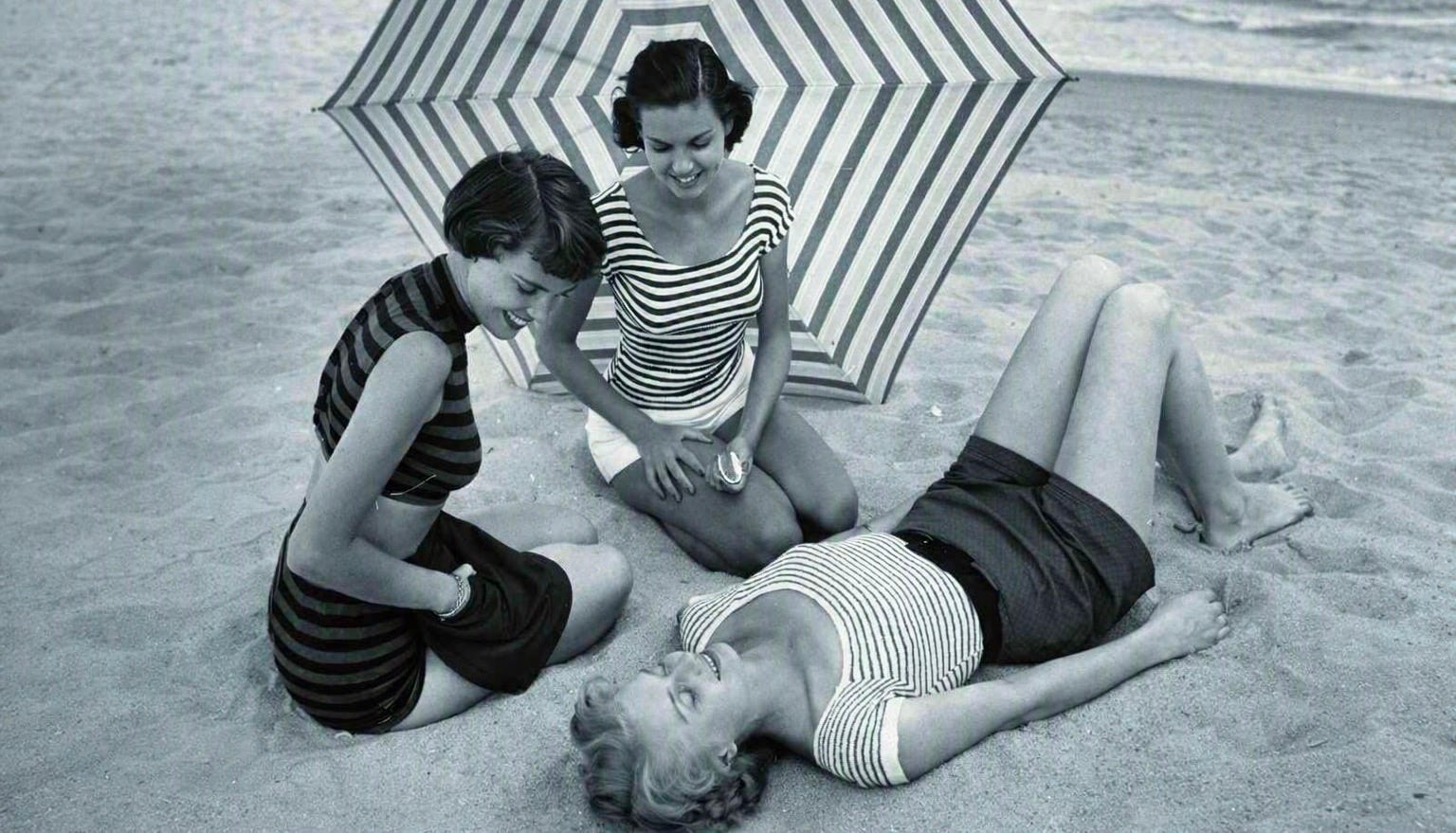
1858.French navy, the coast of Normandy. Twenty-one blue stripes on white, sewn by regulation, not for style. They existed to spot a sailor overboard — a striped body reads faster than a bare one against grey water. Fashion had nothing to do with it. It was a safety device.
Then Chanel takes it. The 1920s, the deck of the Flying Cloud. She lifts the sailor’s jersey the way she lifts the sun — not as tribute, as theft. She brings it ashore, into the city. The stripe stops marking bodies at sea and starts dressing bodies on holiday.
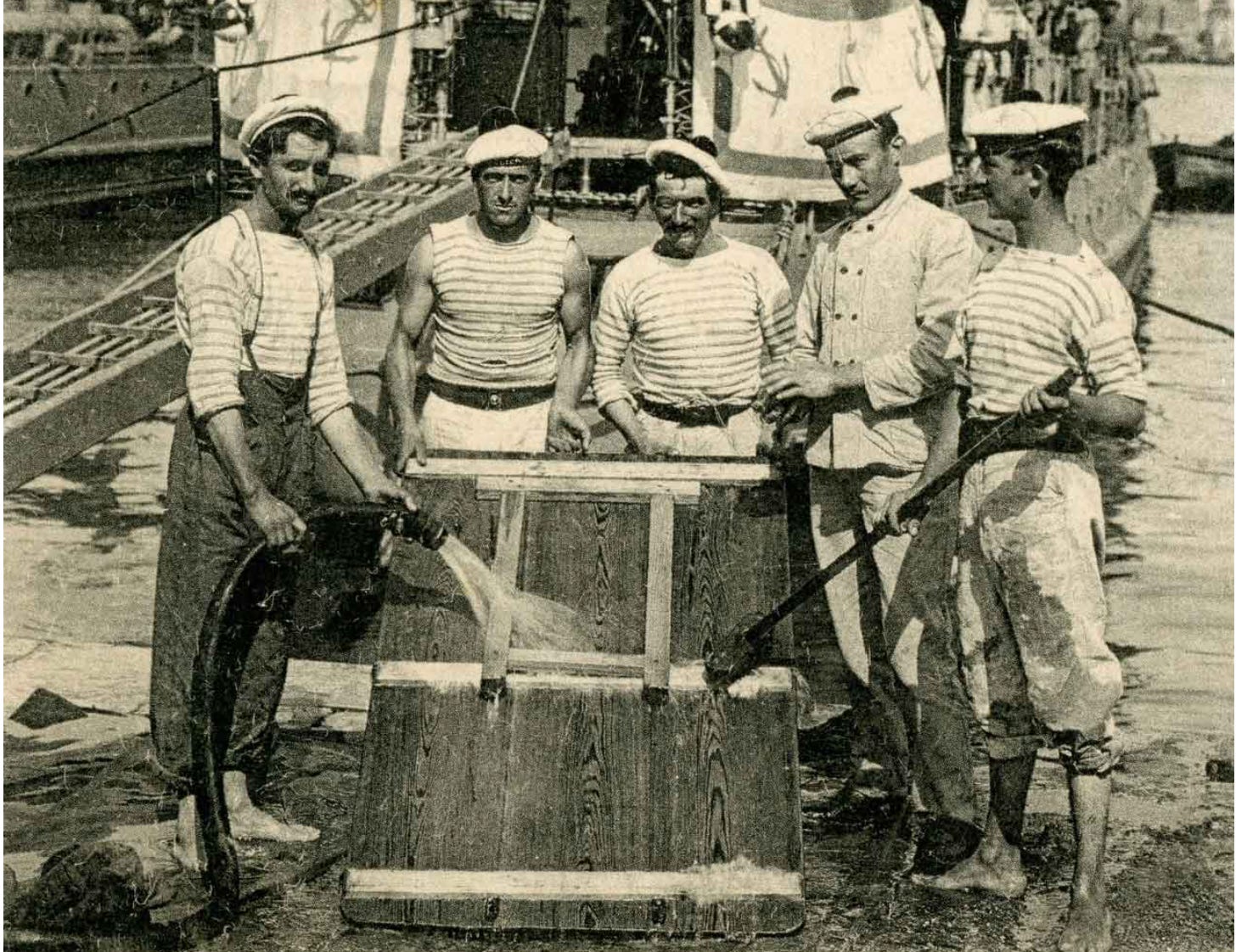
But the real leap isn’t hers. It belongs to a kid from Arcueil who, in the 1980s, decides that jersey will be his public skin for life. Jean Paul Gaultier doesn’t just put it in a collection. He wears it — every day, every interview, every runway, for decades — until he becomes the brand the stripe is selling. Not an iconic piece. A personal uniform turned commercial identity.
Somewhere in between, a quieter theft: Picasso in Antibes, the 1950s, wearing it in every Robert Capa photograph, never asking permission. Not a sailor protecting himself anymore. A genius building his own iconography — and the stripe stops belonging to anyone in particular.
A stripe stolen in the North. A myth invented in the South. Curious?👇

It becomes universal grammar — a red carpet, a Uniqlo shelf, three sizes, free shipping in twenty minutes. Nobody thinks of a Norman sailor anymore. Brittany, which invented the stripe to identify its own men, hasn’t seen a euro of the billions it now moves.
That’s the fate of every working symbol seized by luxury: it survives its function, loses its author, becomes the property of whoever wears it last. The stripe protects no one now. It only tells you who believes they’re wearing it first.
(Italian follows👇)

Stories like this are the heartbeat of Yacht Lounge. If you value this level of insight, join our 3,800 active readers to receive weekly perspectives you won’t find anywhere else.
La Riga.
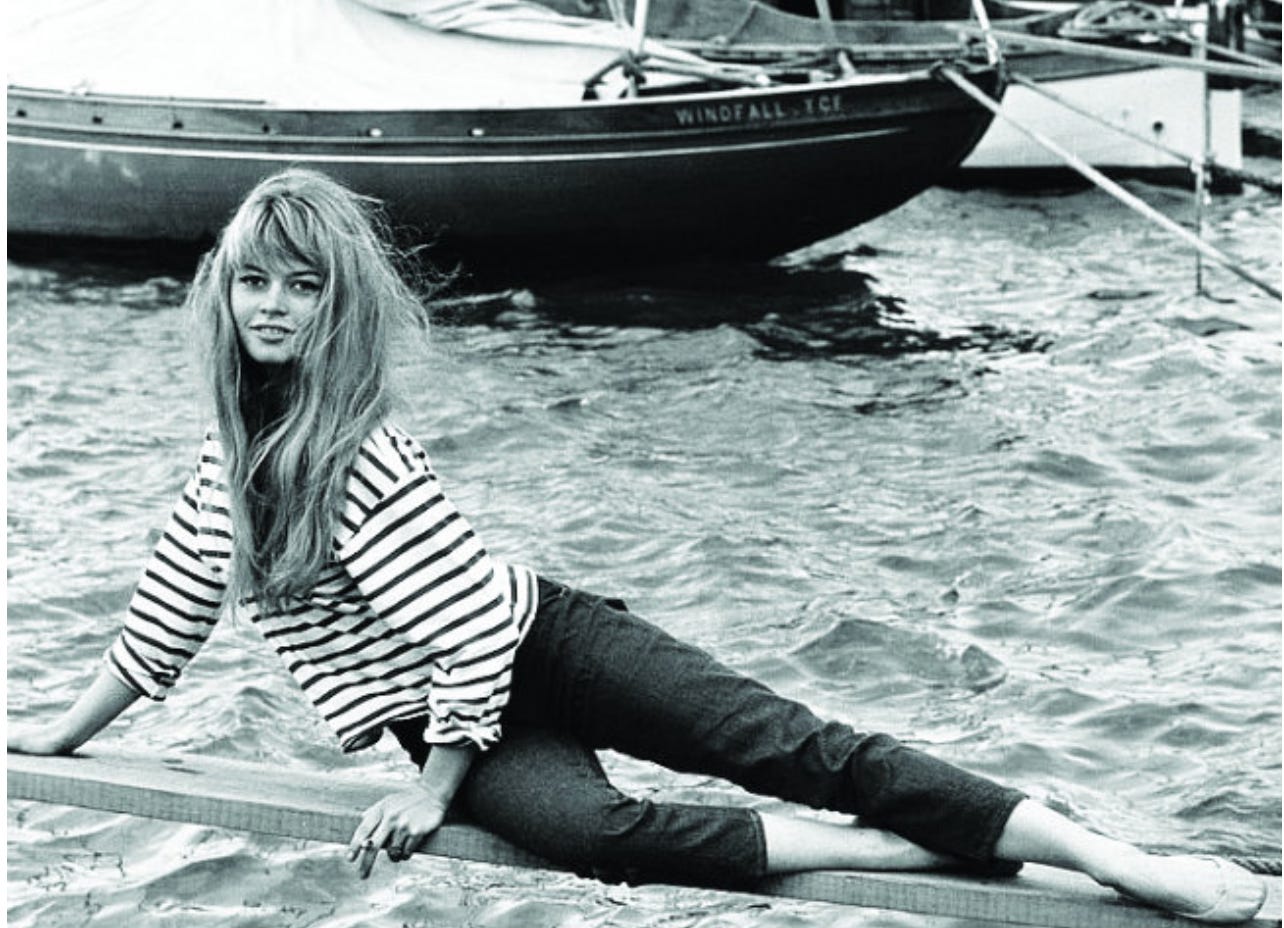
Marina francese, coste della Normandia. Ventuno righe blu su fondo bianco, cucite per regolamento, non per estetica. Servivano a individuare i marinai in mare; un corpo a righe si vede meglio di un corpo nudo, se cade in acqua. La moda non c’entrava. Era un dispositivo di sicurezza.
Poi arriva Chanel. Anni Venti, ponte della Flying Cloud. Ruba la maglia ai marinai come ruba il sole ai pescatori, non per omaggio, per sottrazione. La porta a terra, la porta in città. La riga smette di individuare corpi in mare e comincia a vestire corpi in vacanza.
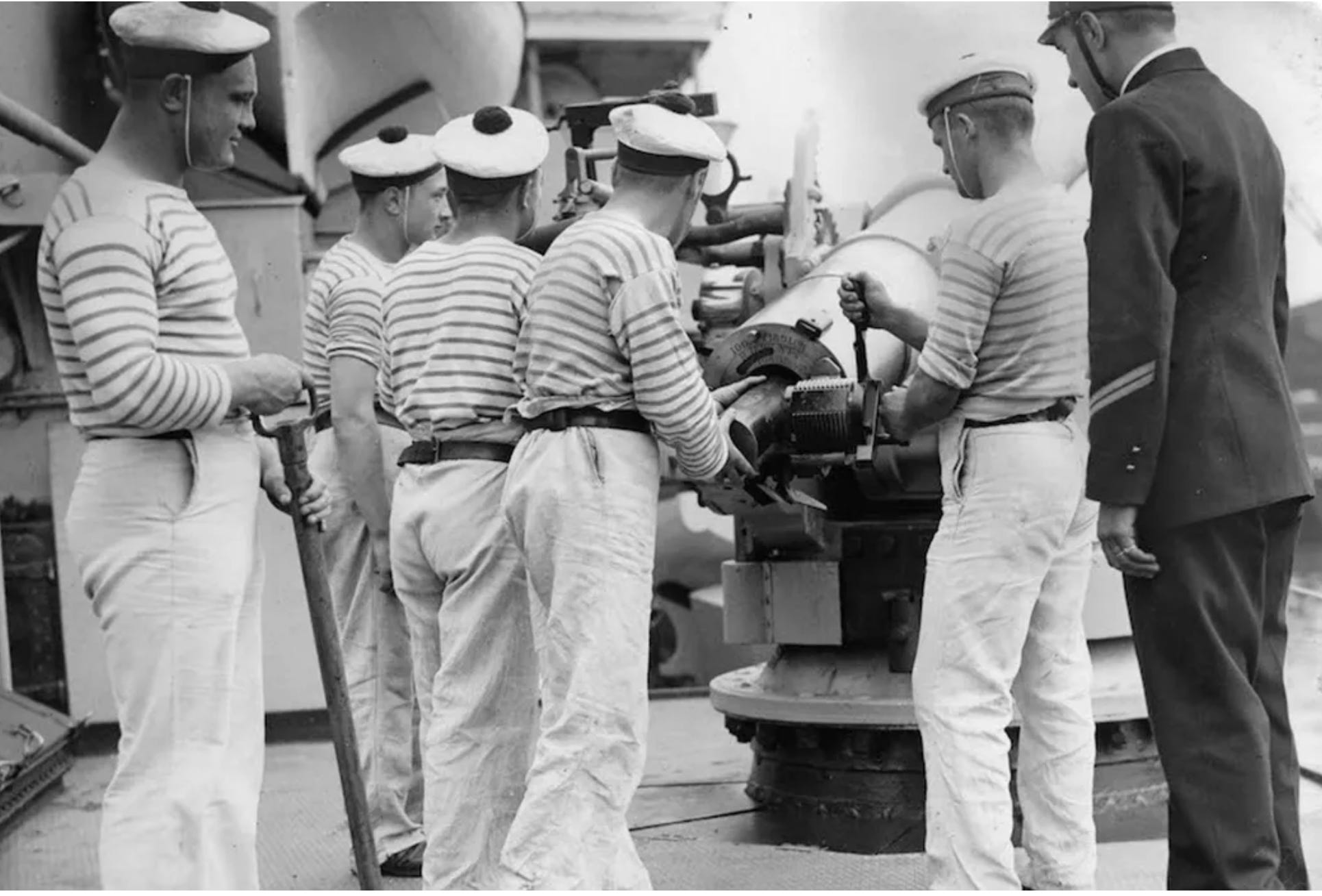
Ma il salto vero non è suo. È di un ragazzo di Arcueil che negli anni Ottanta decide che quella maglia sarà la sua pelle pubblica per sempre. Jean Paul Gaultier non la mette in collezione. La indossa lui, ogni giorno, ogni intervista, ogni passerella, per decenni fino a diventare lui stesso il marchio che la maglia porta addosso. Non un capo iconico. Un’uniforme personale trasformata in identità commerciale.
Nel mezzo, un altro furto silenzioso: Picasso ad Antibes, negli anni Cinquanta, la indossa in ogni fotografia di Robert Capa, senza dirlo a nessuno. Non è più un marinaio che si protegge. È un genio che si costruisce un’iconografia e la riga smette di appartenere a chiunque.
Una riga rubata a Nord. Un mito inventato a Sud. Curious?👇

Diventa grammatica universale, un red carpet, uno scaffale Uniqlo, tre taglie, spedizione gratuita in venti minuti. Nessuno pensa più a un marinaio normanno. La Bretagna, che l’ha inventata per i propri marinai, non vede un euro di questo giro d’affari da miliardi.
È il destino di ogni simbolo operaio catturato dal lusso: sopravvive alla sua funzione, perde il suo autore, diventa proprietà di chi lo indossa per ultimo.
La riga non protegge più nessuno. Racconta soltanto chi crede di indossarla per primo.

Storie come questa sono il cuore di Yacht Lounge. Se apprezzi questo tipo di narrazione, unisciti ai nostri 3.800 lettori attivi per ricevere ogni settimana approfondimenti che non troverai altrove.
Oh this was WONDERFUL!!!
Articolo interessante e godibile.