

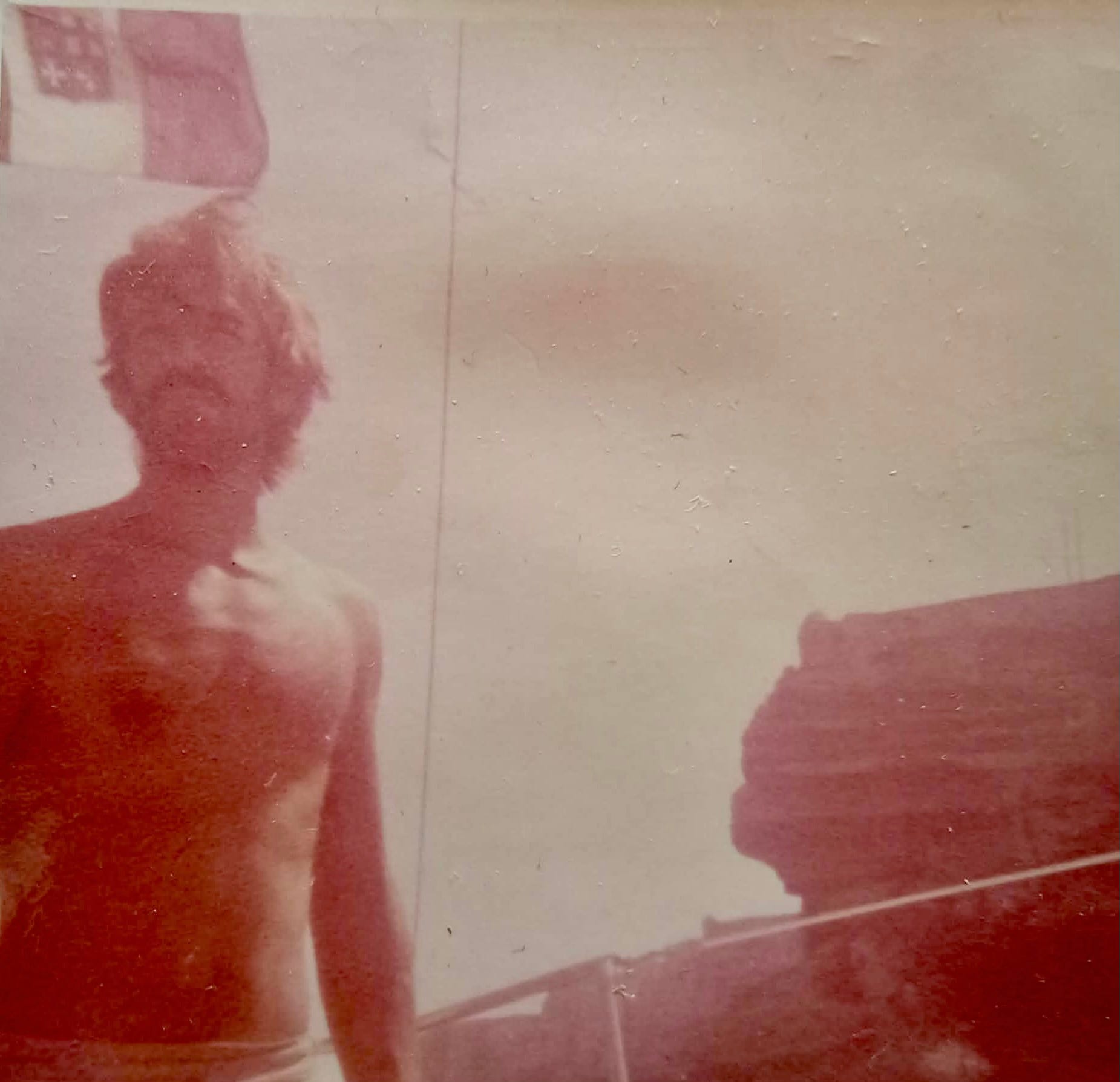
🇺🇸🇮🇹 English & Italian
The CS&RB II Busnelli is moored at the Cowes Yacht Haven dock, surrounded by racing boats that are part of the international fleet of teams from 19 countries, including Italy, competing in the Admiral’s Cup.
The Admiral’s Cup is a regatta for boats of various types, first held in 1957. It take place every two years, usually in odd-numbered years. The start and finish is held off Cowes, in the Solent waters, the wide channel separating the Isle of Wight from the English coast. It is organized by the Royal Ocean Racing Club.
Until 1999, it was contested between national teams, each consisting of three boats. Initially, only Great Britain and the United States participated, but several other national teams later joined. The Fastnet Race was part of the Admiral’s Cup during this early period. In 1971, British Prime Minister Edward Heath also led the winning English team, helming his Morning Cloud II, a 42-footer designed by Sparkman & Stephens, built of mahogany by Lallows in Cowes, and launched in April 1971 specifically for that season’s races.
The 1975 Italian team consisted of Giorgio Falck’s Guia III, Giorgio Carriero’s Mandrake, and Fabrizio Violati’s Vihuela.
Guia III was Bob Miller’s famous Ginko, the inventive Australian designer who would later change his name to Ben Lexcen, designed the 12-meter S.I. Australia, and wrest the America’s Cup from the New York Yacht Club after 137 years. Falck fell in love with her at first sight and bought her in a day. On board are several friends, including Francesco Longanesi Cattani, a fellow instructor at the Caprera Sailing Center, known as Zio Pimperle; Pierre Sicouri; and Paola Pozzolini.
Mandrake is a 14.75-meter Sparkman & Stephens design, built in aluminum by Huisman, not yet recognized as a Royal, as a supplier to the Dutch royal family. Also on board are friends like Lorenzo Bortolotti, Chicco Isemburg, Franco Rodino, and Giorgio Zolezzi.
Vihuela is the most original. Designed by engineer Giulio Cesare Carcano, the brilliant motorcycle designer at Moto Guzzi, creator of the Galletto and the V7, and a passionate yacht designer of unique sailing boats capable of very high performance. Raffaello Napoleone also is a friend on board. The community of young sailors is very lively. We often meet to discuss, compare, make predictions about the progress of the races, gossip, mention those who aren’t there—like the absence of Deception, Vanni Mandelli’s second-class yacht designed by Gary Mull, built in aluminum by Gennari, and skippered by Cino Ricci along with the faithful Laurent Cordell, who was excluded from the team—and joke with those who are there. Life on the docks upon returning from the races is lively, and the CS&RB II Busnelli welcomes those returning from victories and defeats. Mandrake’s disqualification in the first triangle. Guia III’s victory in real time in the second triangle with a second place on corrected time. Vihuela’s abandonment at the Fastnet due to a crack in her mast.
Here you can find the previous episode 👇

In the end, the Italian team finished seventeenth out of nineteen teams, a stinging defeat that the dockside chatter and beers at the pub fail to console, not even in the CS&RB II Busnelli square. Doi tries to stem the disappointment of his friend-enemy Giorgio Falck, from whom he had “stolen” the beautiful Chin the year before in Porto Cervo, displaying all his charm as a blue-eyed earl-sailor.
While the Admiral’s Cup boats are racing and the docks are empty, we do some maintenance on the schooner in preparation for the skipper’s demanding future plans, which include participating in the Financial Times Clipper Race, a crazy London-Sydney-London regatta in just two legs. There are only four competitors. Two fiercely competitive 24-meter giants: the Great Britain II, skippered by Chay Blith, a British soldier, who enlisted a crew entirely of joint forces—the army, navy, and air force—and is famous for having tackled Cape Horn with the Great Britain I against the wind, sea, and current. It’s well known among sailors that anyone who has rounded Cape Horn can piss against the wind. Imagine Chay Blith, who also sailed against the current and sea! The competitor is Olivier de Kersauson, a pupil of Eric Tabarly, aboard Kriter III, where the atmosphere is like a barracks. Then there’s the CS&RB II Busnelli, commanded by our gentle skipper, and finally a 16.8-meter Dutch iron ketch, “The Great Escape,” commanded by Henk Huisman, who will finish this grueling marathon a month after the leader. Third place is certainly reserved for the skipper, if all goes well. But he’s happy, just to be at sea for months on end with his beautiful Chin, who will join him in London from Chicago. Carla and the children disembark to resume a normal city life. I was scheduled to join the Clipper Race crew, but given the competitors, the odds, the two two-month ocean legs, and the seven months already spent on board with inexhaustible hardships, I decide to disembark and return to Milan to try my hand at architecture. Even more difficult, urban planning, given my degree thesis on a territorial planning project for 60 municipalities between Padua and Venice, including the two provincial capitals. But fate lurked among the bollards and mooring lines of the wooden dock of the Cowes Yacht Haven.
Secret Ocean podcast 👇

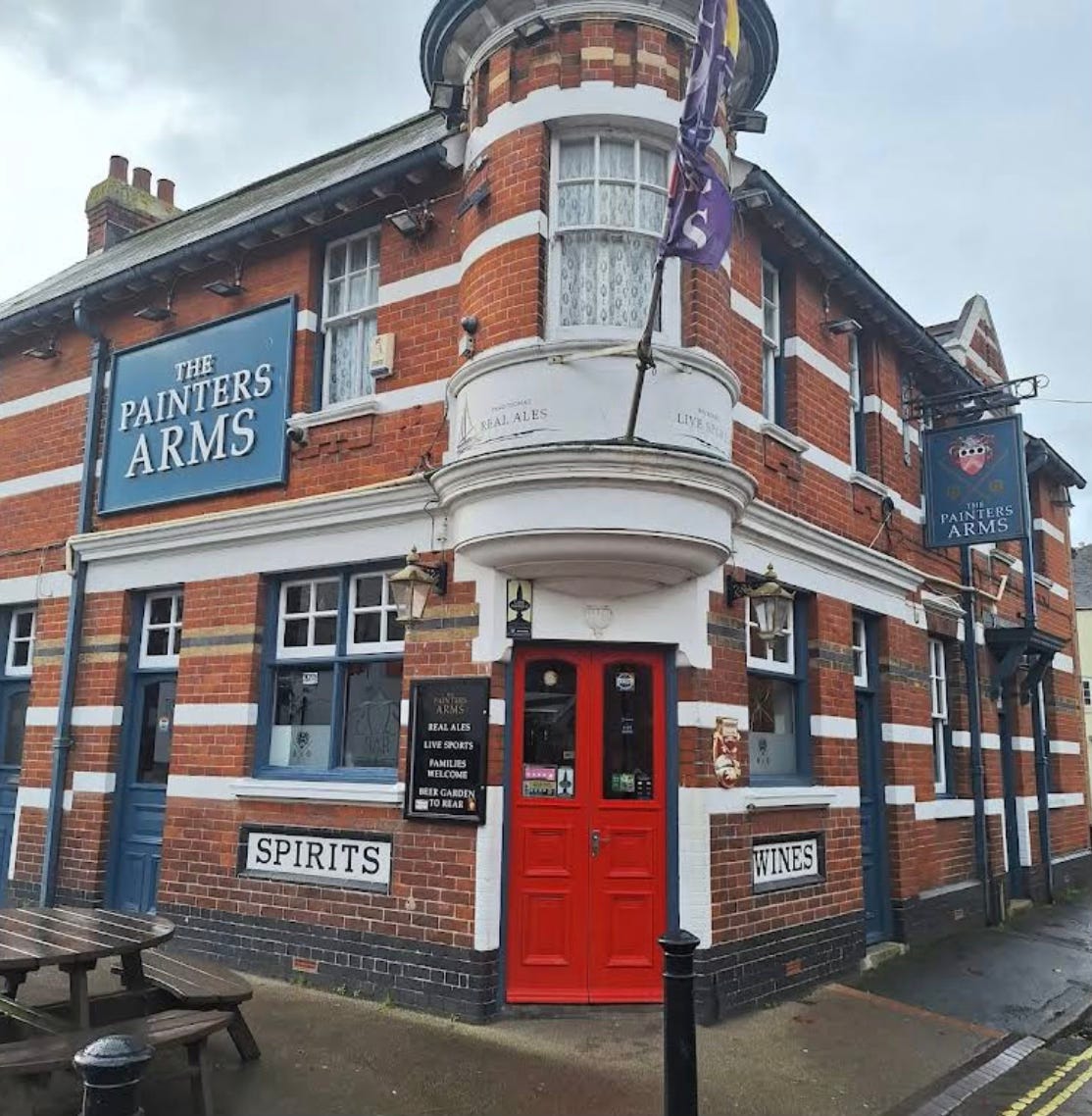
Joining my sailing friends, fellow adventurers on Caprera and on the boat, is Giancarlo Scalfati, editor of Uomo Mare, a fashion photographer, and a sailing enthusiast, an older friend who also happens to be my neighbor in Milan, on Via Leopardi. I’m living at 15, he’s at 28. Giancarlo is, perhaps not by chance, surrounded by artists. Sculptor, painter, musician, and aphorist Fausto Melotti has his studio in the building at Via Leopardi 28. His sculpture is intellectual in nature, and he is best known for his lightweight works in steel, brass, and copper, imbued with a surreal and ironic vein. In the courtyard on Via Lamarmora, where his studio is located, which he shared with the famous photographer Gianni Berengo Gardin, and where I met him when I was visiting my friend Adalaura, who was his assistant a few years earlier, is the studio of sculptor Arnaldo Pomodoro, best known for his distinctive bronze spheres, his favorite material, which “break” open to the viewer, who is drawn to explore and discover the inner workings, in a contrast between the perfect smoothness of the form and the hidden complexity of the interior. Giancarlo launched Uomo Mare in 1972 as a supplement to Uomo Vogue, the men’s magazine from Condé Nast, the publisher of Vogue, the most sophisticated international fashion magazine.
Giancarlo runs to me, hugs me, and says in his unmistakably Neapolitan accent: “Dear Beppe, Uomo Mare is becoming bimonthly, we need to strengthen the editorial staff. I need competent young people like you. Do you want to join?” Help! I wanted to return to Milan, fight with public bodies, municipalities, and the region, to try to join a team that would teach me how to manage the territory. A recent graduate’s dream. Only 3% of architecture graduates in those years managed to practice the profession. The remaining 97% scattered throughout the working world, embracing any profession, from teaching to representing a building materials company. I had the privilege of being sought out on the docks in Cowes, Isle of Wight, by a friend who offered me a great job, an honorable profession, and a decent salary on a silver platter. But that architect bug... I consulted two people I trusted implicitly: Daniela, who had graduated before me, had already started working, and had taken a seven-month sabbatical to experience that unmissable adventure; and my father, a surveyor, an expert in construction sites and buildings, a very reliable man and a reliable point of reference. Both, in distant yet simultaneous unison, overlapping with my question, “What should I do?”, replied, “Are you stupid? A friend of yours hires you on the docks; you don’t have to submit a CV, write cover letters, or prostrate yourself on that pilgrimage wandering from office to office, begging for a job even for little money, even for free, just to gain experience, and he offers you a very respectable salary... and you? Are you even thinking about it?”
My trusted advisors have given the verdict: accept! And I accepted, beginning that distant August of 1975 a career as a nautical journalist that has been lasting 51 years. Giancarlo is happy with the verdict, praising the advisors. He invites me to toast my decision. We walk towards The Painters Arm, the pub closest to Yacht Haven. The bar tender takes the orders at the counter. “For me, a pint of lager.” “And for you, sir?” Giancarlo, thinking he’s showing off his good English with a slang expression, replies: “For me, a baby (pronounced “a babbi”). The bar tender, exquisitely English, unperturbed, replies: “A… baby sir?” Because in Milan, a small whisky in those years was called “baby”... an expression that never left the Milanese customs borders. The bartender and I exchange a glance accompanied by raised eyebrows. We toast, and the deal is done. Thank you, Giancarlo, the third mentor in my life.
We decide to take a stroll along the charming, pedestrianized High Street, the backbone of Cowes, chatting about the Admiral’s Cup, shipowners, yacht designers, magazines, competitors, programs, and projects. At number 30, we come across the most fascinating yacht chandler imaginable. We enter, wandering among ropes, hardware, oilskins, nautical charts, and flags, we buy a souvenir. At the cash register, a gentleman who speaks English with an unmistakable Italian accent is waiting for us. I ask him. And he replies, “I’m Tuscan.” His name is Gabriele Rafanelli, the husband of the owner’s daughter, who owns this shop dating back to 1799, located a few hundred meters from the inaccessible temple of sailing, the Royal Yacht Squadron. Gabriele would play an important role in Italian sailing, alongside Raul Gardini.
Determined to return to Milan together, Daniela wanted to fulfill a long-standing dream: to buy a Morris Minor 1000 Traveller, a compact car predating the Mini, with a station wagon body, which in those years was called in Italy a “giardinetta,” with the rear body made of structural ash and aluminum infill panels. The two rear doors of the station wagon opened like those of a wardrobe. Only the English could apply such a solution
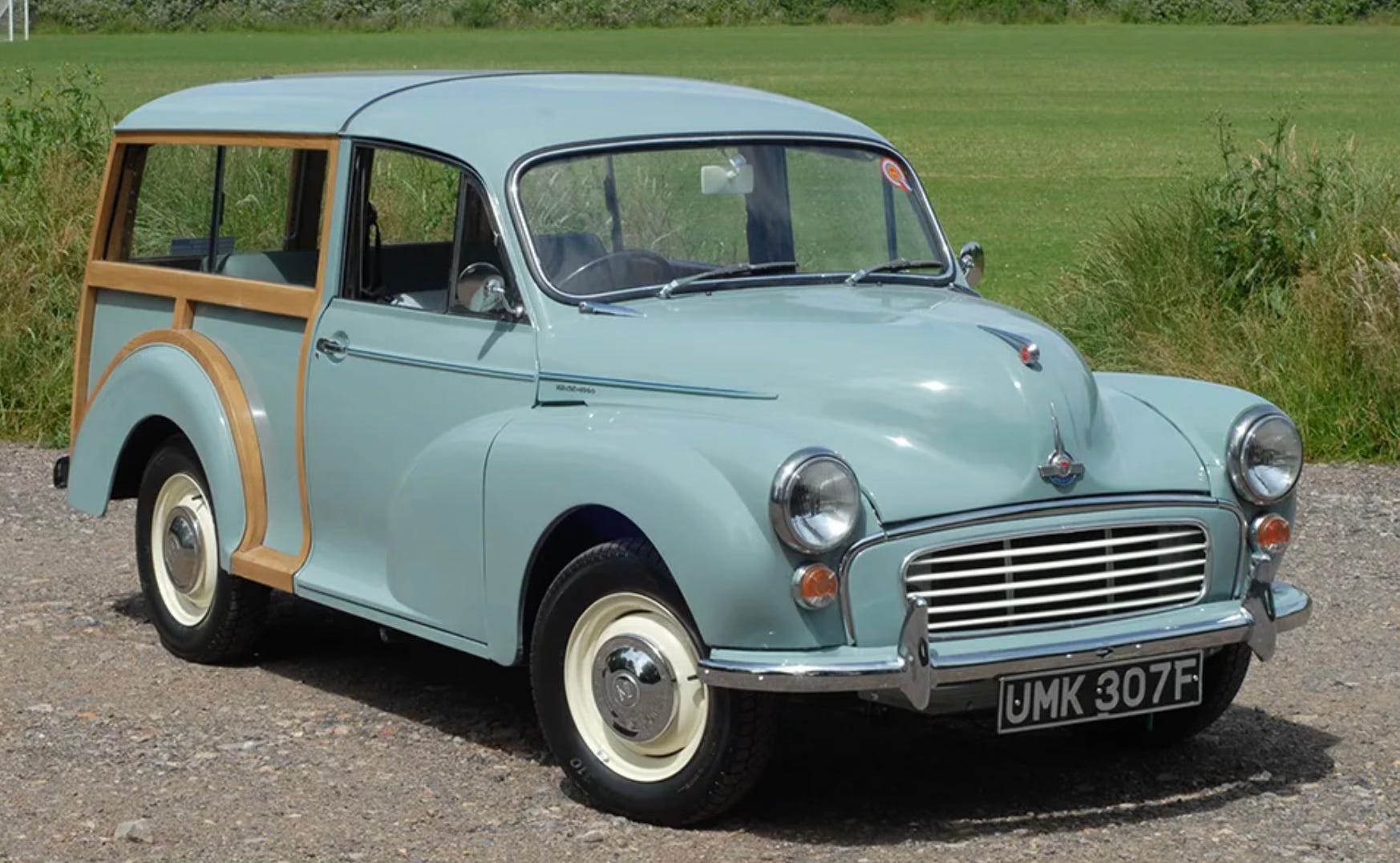
.A friend of Jeff’s, Nigel, helps us with the purchase. We call him Giona, because he pronounces his name with a Cockney accent. We take a ferry from Yarmouth, the western corner of the island, to Lymington on the English coast to see the car. We like it. We use our last pennies and it’s ours. Daniela is happy, but she doesn’t dare to take the steering wheel, driving on the right and keeping to the left. I’m excited by this inversion and ask Nigel—Giona—how to register the car. He doesn’t understand what I mean, so I try to explain that in our country, a car must be registered to a person, and their name must be entered in the registration document. He spreads his arms and directs me to a motor vehicle registration office in Winchester, the town with the famous cathedral of the song, 30 miles from Lymington. We set off, tackling the reverse driving. When we reach the austere public building, we enter, realizing that there’s not a soul around except for an elderly lady behind a counter. I present her with the registration document, a handwritten green double-fold booklet, asking how to register my name. She hands me a pen and candidly says, “Write it down.” There’s no bureaucracy in England. For us, it’s science fiction. We return to the island, delighted, to load up our beautiful station wagon with all the memories and collections of shells, reef fragments, coconuts, nutmegs, natural and artificial souvenirs, gathered during our seven-month wandering. Luckily, we bought the Minor 1000; otherwise, we would have had to ship those fragments of life, islands, dreams, and adventures, and it would have cost us perhaps as much as the Morris. At the time, it hadn’t yet become a cult car and cost as much as an old, out-of-fashion used car.
830 miles, or 1,330 kilometers, await us, to Milan, crossing the English Channel, France, and Switzerland. Daniela gets the Kartell, and I get the Uomo Mare.
Who will find the best path is only God’s guess, and only the future will determine.
by Roberto Franzoni
(English translation and editing: Elena Paxia)
(Italian Follows)

Yacht Lounge grows through word of mouth among curious minds. If this story inspired you, share it with those who navigate your same routes.
Stories like this are the heartbeat of Yacht Lounge. If you value this level of insight, join our 3,800 active readers to receive weekly perspectives you won’t find anywhere else.
Oceano Segreto.
Chapter 11. CS&RB II - A Cowes, l’Admiral’s Cup e un ingaggio in banchina
Il CS&RB II Busnelli è ormeggiato alla banchina del Cowes Yacht Haven, circondato dalle barche da regata che fanno parte della flotta internazionale composta da squadre di 19 paesi, tra cui l’Italia, che partecipano all’Admiral’s Cup.
L’Admiral’s Cup è una regata di imbarcazioni di diverso tipo che tenne la prima edizione nel 1957 e ha frequenza biennale disputandosi di norma negli anni dispari. La partenza e l’arrivo avvengono al largo di Cowes, nelle acque del Solent, l’ampio canale che separa l’isola di Wight dalla costa inglese ed è organizzata dal Royal Ocean Racing Club.
Fino al 1999 è stata disputata fra squadre nazionali, ognuna delle quali costituita da tre imbarcazioni. All’inizio, soltanto la Gran Bretagna e gli Stati Uniti vi presero parte, ma successivamente si aggiunsero diverse altre squadre nazionali. La Fastnet race era parte dell’Admiral’s Cup durante questo primo periodo. Nel 1971, il Primo Ministro inglese Edward Heath fu a capo anche della vincitrice squadra inglese timonando il suo Morning Cloud II, un 42 piedi, progettato da Sparkman & Stephens, costruito in mogano da Lallows proprio a Cowes, e varato nell’aprile del 1971 appositamente per le regate di quella stagione.
La squadra italiana del 1975 è composta da Guia III di Giorgio Falck, da Mandrake di Giorgio Carriero e da Vihuela di Fabrizio Violati.
Guia III è il famoso Ginko di Bob Miller, l’estroso progettista australiano che poi cambierà il nome in Ben Lexcen, disegnerà il 12 metri S.I Australia e estirperà la Coppa America dal New York Yacht Club dopo 137 anni, di cui Falck s’innamora con un colpo di fulmine e lo compera in una giornata. A bordo ci sono vari amici tra cui Francesco Longanesi Cattani, collega istruttore al Centro Velico di Caprera, detto Zio Pimperle, Pierre Sicouri, e Paola Pozzolini.
Mandrake è un progetto di Sparkman & Stephens costruito in alluminio da Huisman, non ancora riconosciuto come Royal, ovvero fornitore della casa reale d’Olanda, di 14, 75 metri. A bordo anche qui ci sono amici come Lorenzo Bortolotti, Chicco Isemburg, Franco Rodino e Giorgio Zolezzi.
Vihuela è la più originale. Disegnata dall’ingegnere Giulio Cesare Carcano, il geniale progettista di motociclette alla Moto Guzzi, padre del Galletto e della V7, appassionato yacht designer di particolari barche a vela capaci di prestazioni molto elevate. Anche qui un amico a bordo, Raffaello Napoleone. La comunità di giovani velisti è molto vivace. Ci troviamo spesso per discutere, confrontare, formulare previsioni sull’andamento delle regate, spettegolare, citare chi non c’è, come l’assenza di Deception, il seconda classe di Vanni Mandelli progettato da Gary Mull, costruito in alluminio da Gennari e comandato da Cino Ricci insieme al fedelissimo Laurent Cordell, escluso dalla squadra, e scherzare con chi c’è. La vita in banchina al ritorno dalle regate è animatissima e il CS&RB II Busnelli accoglie i reduci da vittorie e sconfitte. La squalifica di Mandrake nel primo triangolo. La vittoria di Guia III in tempo reale nel secondo triangolo con un secondo posto in tempo compensato. L’abbandono di Vihuela al Fastnet per fessura all’albero.
Alla fine la squadra italiana si piazza diciassettesima su diciannove squadre, una cocente sconfitta che le chiacchiere di banchina e le birre al pub non riescono a consolare, nemmeno nel quadrato del CS&RB II Busnelli. Doi cerca di arginare la delusione del suo amico-nemico Giorgio Falck, a cui l’anno prima a Porto Cervo aveva “soffiato” la bella Chin sfoderando tutto il suo charme di conte-navigatore dagli occhi celesti.
Qui puoi leggere la puntata precedente 👇
Mentre le barche dell’Admiral’s Cup sono in regata e le banchine sono vuote, noi facciamo un po’ di manutenzione alla goletta in vista degli impegnativi programmi futuri dello skipper, che prevedono la partecipazione alla Financial Times Clipper Race, una folle regata Londra-Sydney-Londra in due sole tappe. I concorrenti sono solo quattro. Due giganti di 24 metri agguerritissimi: il Great Britain II capitanato da Chay Blith, un militare inglese che ha arruolato un equipaggio tutto di militari interforze, esercito, marina e aviazione ed è famoso per aver affrontato con il Great Britain I Capo Horn contro vento e contro mare e corrente. È risaputo tra i marinai che chi ha passato Capo Horn può pisciare contro vento. Figuriamoci Chay Blith che lo ha passato anche contro corrente e contro mare! Il competitor è Olivier de Kersauson, allievo di Eric Tabarly, a bordo di Kriter III, dove vige un clima da caserma. Poi c’è il CS&RB II Busnelli comandato dal nostro mite skipper e infine un ketch olandese di ferro “The Great Escape” di 16,8 metri, comandato da Henk Huisman, che alla fine della estenuante maratona arriverà un mese dopo il primo. Allo skipper è certamente riservato il terzo posto, se tutto va bene. Ma lui è contento, pur di stare in mare mesi e mesi con la sua bella Chin, che lo raggiungerà a Londra da Chicago. Carla e i bambini sbarcano per riprendere una vita cittadina normale. Io ero previsto nell’equipaggio per la Clipper Race, ma visti i concorrenti, viste le probabilità, le due tappe da due mesi di oceano l’una, i sette mesi già trascorsi a bordo con inesauribili traversie, decido di sbarcare e rientrare a Milano per tentare di praticare la professione di architetto. Anzi ancora più difficile, di urbanista, dato il tema della mia laurea su un progetto di assetto territoriale per 60 comuni tra Padova e Venezia, compresi i due capoluoghi di provincia. Ma il destino era acquattato tra le bitte e le cime d’ormeggio della banchina in legno del Cowes Yacht Haven.
Mescolato agli amici di vela, compagni di avventure a Caprera e in barca compare Giancarlo Scalfati, direttore di Uomo Mare, fotografo di moda e appassionatissimo di barca a vela, un amico più grande, tra il resto mio vicino di casa a Milano, in via Leopardi. Io al 15, lui al 28. Giancarlo è, forse non per caso, circondato da artisti. Nel palazzo di via Leopardi 28 ha lo studio Fausto Melotti, scultore, pittore, musicista e aforista. La sua scultura ha un carattere mentale ed è famosa soprattutto per le sue leggerissime opere in acciaio, ottone e rame intrise di una vena surreale e ironica. Nel cortile di via Lamarmora, dove si trova il suo studio che lui condivideva col famoso fotografo Gianni Berengo Gardin, e dove l’ho conosciuto quando andavo a prendere la mia amica Adalaura che era una sua assistente qualche anno prima, aveva lo studio lo scultore Arnaldo Pomodoro, famoso soprattutto per le particolari sfere di bronzo, materiale che predilige, che si “rompono” aprendosi allo spettatore, che è portato alla ricerca e alla scoperta del meccanismo interno, in un contrasto tra levigatezza perfetta della forma e complessità nascosta dell’interno. Giancarlo aveva varato Uomo Mare nel 1972 come supplemento dell’Uomo Vogue, rivista maschile di Condé Nast, l’editore di Vogue, la più sofisticata rivista internazionale di moda.
Giancarlo mi corre incontro, mi abbraccia e col suo accento inequivocabilmente napoletano mi dice: “caro Beppe, Uomo Mare diventa bimestrale, dobbiamo rinforzare la redazione. Ho bisogno di giovani competenti come te. Vuoi aderire?”. Aiuto! Io volevo tornare a Milano, lottare con gli enti pubblici, coi comuni, con la regione, per cercare di entrare in una squadra che mi insegnasse a gestire il territorio. Sogni di un neo laureato. Solo il 3% dei laureati in architettura riusciva in quegli anni a praticare la professione. Il rimanente 97% si sparpagliava nel mondo del lavoro abbracciando non importa quale mestiere, dall’insegnate, al rappresentante di qualche azienda di materiali edilizi. Io avevo il privilegio di essere cercato in banchina a Cowes, isola di Wight, da un amico che mi offre su un piatto d’argento un bel mestiere, una professione onorevole, uno stipendio dignitoso. Ma quel tarlo dell’architetto… MI consulto con due persone di cui mi fido ciecamente, Daniela, che si era laureata prima di me, aveva già incominciato a lavorare e aveva preso sette mesi sabbatici per vivere quell’avventura irrinunciabile, e mio padre, geometra, esperto di cantieri e di costruzioni, uomo molto affidabile e figura di riferimento sicuro. Entrambi a un unisono lontano ma simultaneo e sovrapposto alla mia domanda “che fare?” rispondono “ma sei scemo? Un tuo amico ti ingaggia in banchina, non devi presentare un curriculum, scrivere lettere di presentazione, prostrarti a quel pellegrinaggio di ufficio in ufficio pietendo un posto anche a pochi soldi, anche gratis, pur di fare esperienza, e ti offre uno stipendio onorevolissimo… e tu? Ci pensi anche sopra?”
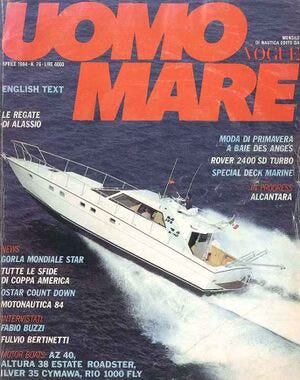
I miei consiglieri fidati hanno emesso il verdetto: accetta! E io ho accettato, iniziando in quel lontano agosto 1975 una carriera di giornalista nautico che dura da 51 anni. Giancarlo è felice del verdetto, lodando i consiglieri. Mi invita a brindare alla decisione. Ci incamminiamo verso The Painters Arm il pub più vicino allo Yacht Haven. Il bar tender raccoglie le ordinazioni al bancone. “For me a pint of lager”. “And for you sir?” Giancarlo, pensando di sfoggiare un buon inglese con un’espressione gergale risponde: “for me a baby (pronunciato “e bebbi”). Il bar tender, squisitamente inglese, senza scomporsi ribatte: “a… baby sir?” Già perché a Milano un whisky piccolo in quegli anni si chiamava “un baby”… espressione che non usciva dalla cinta daziaria milanese. Il bar tender e io ci scambiamo uno sguardo accompagnato da alzata di sopracciglia. Brindiamo e l’affare è fatto. Grazie Giancarlo, terzo mentore della mia vita.
Decidiamo di fare una passeggiata lungo la suggestiva e pedonale High Street, la spina dorsale di Cowes, chiacchierando di Admiral’s Cup, di armatori, di yacht designer, di riviste, di concorrenti, di programmi e di progetti. All’altezza del numero 30 ci imbattiamo nello yacht chandler più fascinoso che si possa immaginare. Entriamo, aggirandoci tra cordami, ferramenta, cerate, carte nautiche, bandiere, compriamo un souvenir. Alla cassa ci attende un signore che parla un inglese con inconfondibile accento italiano. Glielo chiedo. E lui risponde, “sono toscano”. È Gabriele Rafanelli, è il marito della figlia del proprietario di questo negozio che data 1799, a qualche centinaio di metri di distanza dall’inaccessibile tempio della vela, il Royal Yacht Squadron. Gabriele avrà un ruolo importante nella vela italiana, a fianco di Raul Gardini.
Il podcast di Oceano Segreto 👇

Decisi a tornare insieme a Milano, Daniela vuole esaudire un suo desiderio da tempo: comperare una Morris Minor 1000 Traveller, ovvero una vettura utilitaria anteriore alla Mini, con la carrozzeria da station wagon, che in quegli anni si chiamava “giardinetta”, con il blocco posteriore della carrozzeria costruita in frassino strutturale e pannelli di tamponamento di alluminio. Le due porte posteriori della giardinetta si aprono come quelle di un armadio. Solo gli inglesi potevano inventare una soluzione simile.
Ci aiuta nell’acquisto un amico di Jeff, Nigel, che noi chiamiamo Giona, per come lui pronuncia il suo nome con accento cockney. Andiamo a Lymington sulla costa inglese, con un traghetto da Yarmouth, angolo occidentale dell’isola, a vedere la macchina. Ci piace. Diamo fondo agli ultimi soldi ed è nostra. Daniela è felice, ma non osa guidare a rovescio, con guida a destra e tenendo la sinistra. Io sono eccitato da questa inversione e chiedo a Nigel – Giona come si fa l’intestazione dalla macchina. Non capisce cosa voglio dire, cerco di spiegargli che da noi un’automobile va intestata a una persona, che va iscritto il suo nome sul libretto. Allarga le braccia e mi indirizza a un ufficio della motorizzazione a Winchester, la cittadina con la famosa cattedrale della canzone, a 30 miglia da Lymington. Partiamo affrontando la guida a rovescio. Giunti davanti al severo edificio pubblico entriamo, costatando che non c’è anima viva, se non un’anziana signora dietro a uno sportello. Le presento il libretto, un pieghevole verde a due ante, scritto a mano, chiedendole come effettuare l’iscrizione del mio nome. Lei mi porge una biro e mi dice con candore “scrivilo”. Non c’è burocrazia in Inghilterra. Per noi è fantascienza. Torniamo divertiti nell’isola per caricare la nostra stupenda giardinetta di tutti i ricordi e le raccolte di conchiglie, di frammenti di reef, di noci di cocco, di noci moscate, di souvenir naturali e costruiti, raccolti nei sette mesi di peregrinazione. Per fortuna abbiamo comperato la Minor 1000, altrimenti avremmo dovuto spedire quei frammenti di vita, di isole, di sogni, di avventure e ci sarebbe costato forse quanto la Morris. Che allora non era ancora diventata una vettura cult e costava come una vecchia auto usata fuori moda.
Ci aspettano 830 miglia ovvero 1.330 chilometri fino a Milano con la traversata della Manica, la Francia, la Svizzera. A Daniela spetta la Kartell a me Uomo Mare.
Chi vada verso il destino migliore solo al dio è dato di sapere e solo il futuro lo stabilirà.
by Roberto Franzoni

Yacht Lounge cresce grazie al passaparola tra menti curiose. Se questo racconto ti ha ispirato, condividilo con un amico.
Storie come questa sono il cuore di Yacht Lounge. Se apprezzi questo tipo di narrazione, unisciti ai nostri 3.800 lettori attivi per ricevere ogni settimana approfondimenti che non troverai altrove.