

🇺🇸🇮🇹 Bilingual content: English first, Italian follows
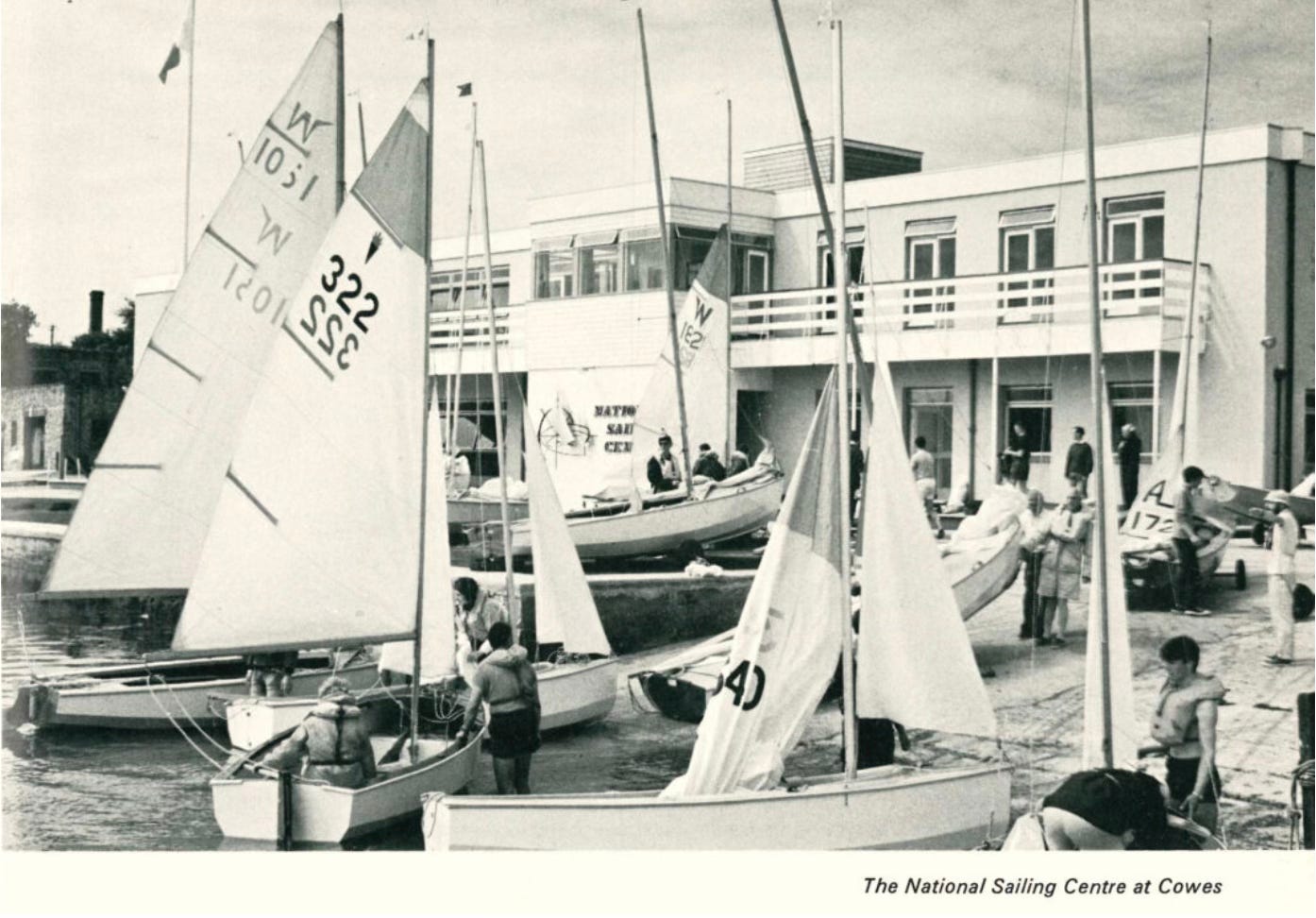
The crew of the CS&RB II Busnelli is strengthening for the first race we will tackle, departing from Newport, RI, and arriving in Cowes, on the Isle of Wight, the capital of English sailing, where the America’s Cup was born on August 22, 1851. It was won by the schooner America, which brought the “100 Guinea Cup,” later known as “the Jug,” to the Atlantic coast of the United States, specifically to the halls of the prestigious and exclusive New York Yacht Club, where, as recently as 1975, women were still prohibited.
Cowes also hosts the Admiral’s Cup, which from 1957 to 1999 was contested between national teams, each consisting of three boats. A dominant monopoly of the English and American teams, with a few gains by the German team, the race was won for the first time in 1995 by the Italian team, consisting of Rinaldo Del Bono’s Capricorno, skippered by Flavio Favini; Pasquale Landolfi’s Brava Q8, skippered by Francesco de Angelis; and Paolo Gaia’s Mumm a Mia!, skippered by Tommaso Chieffi.
Nine participants in the Transatlantic Race included three champions: Jim Kilroy’s Kialoa III, Baron Edmund de Rothschild’s Gitana VI, and Ted Hood’s Robin, designer and sailmaker.
In addition to the eight on board, two of whom are children, there are Luigi, fresh from Italy to experience his first transatlantic race, and David, a friend of Chin’s from Chicago. He is inexperienced in sailing, but young, robust, and enthusiastic about his ocean debut. He has the look of a Jewish intellectual, is gay, and is very friendly and sociable. He learns the terminology, which Master Jeff teaches him with gruff patience. The two characters couldn’t be more different.
Luigi is Roman, he’s young like Paolo, and he’s the son of a friend of our friend Riccardo Tosti, a dealer for Barberis sailboats. He’s raced in the Tyrrhenian Sea, but here we’re in the Atlantic. Frankly, the crew reinforcement isn’t that great.
After a last sandwich at Sloppy Joe’s, shared with the newcomers and washed down with copious cans of Budweiser, we prepare the boat for a crossing that won’t be as smooth and gentle as the east-to-west one in the trade winds. Here we’re at 41 degrees north latitude; westerlies should be blowing, so we should still be pushed by downwinds, but nothing is definitive, as in the trade winds.
Here you can find the link to the previous episode 👇

In fact, the weather doesn’t look promising. We leave Narragansett Bay with very light, variable airs, as if we were in the Gulf of Tigullio. But to make our departure even more difficult, an unpleasant fog descends, rendering the entire sea and sky gray, indistinct, and muffled. Leaving the bay, we must cross the channel between the two most famous islands in the area, Martha’s Vineyard and Nantucket. In the 19th century, they were the home ports of the large whaling fleet that inspired Hermann Melville to write his novel Moby-Dick, the saga of the white whale. In recent times, they have been the golden and exclusive refuge of the upper-class Wasps (White Anglo-Saxon Protestants), the descendants of the first Anglo-Saxon immigrants to New England, considered the representatives of the dominant culture and real power in the United States, like the Kennedys. Then, past Cape Cod, which closes the gulf where Boston is located, we head towards the coast of Nova Scotia and then Newfoundland, following the great circle that rises to 55 degrees north latitude and descends to 50 degrees at Cowes and the Isle of Wight.
The great circle route is the shortest route between two points on a spherical surface like the Earth, much to the chagrin of contemporary flat-earthers. The route intersects the meridians at varying angles, unlike the rhumb line, which intersects them all at the same angle, as represented by the Mercator projection, the nautical charts we use, which distort the Earth’s projection as longitude increases. The most striking example is the representation of Greenland, which appears on nautical charts larger than North America. The rhumb line is easier to follow, maintaining the same angle with the meridians, but it is longer.
Engaged in these scientific, navigational, and philosophical discussions, we proceed very slowly, and listening to the radio and the positions of the favorites, we realize that they have clocked up a considerable number of miles compared to us. The CS&RB II Busnelli is not strong in light airs. It weighs 27 tons and has little sail. Robin is light, and Kialoa III is very powerful. We plot the positions of the three favorites on the North Atlantic plotting chart and see that they are keeping off Nova Scotia. Listening to the weather report, we begin to understand why. After the calm, the mist, and the leaden-gray sea, the unexpected tail of the first hurricane of the season, Ami, is arriving, at a time when hurricanes still only had female names. The exponents of the patriarchy explain why. It’s all abnormal. The month and the latitude. An American adage about hurricanes goes: “June too soon, July don’t try, August the worst, September remember, October all over.” And besides, the hurricane is tropical, it should be between 15- and 25-degrees latitude. What’s it doing at 40? And instead, she, Ami, unaware and disrespectful of the rules and adages, rises and rises and rises, but doesn’t lose strength. Winds of up to 80 knots are forecast, force 1 on the Saffir-Simpson scale for measuring the intensity of tropical cyclones. No one seems to care, except the skipper and me, who remember a sinister phrase by Bowditch, author of “The New American Practical Navigator,” the American navigator’s manual, which states: “A close encounter with a tropical hurricane is an experience never to be forgotten.” What awaits us, with two children, a young woman not that much experienced, and two novices?
The wind arrives and begins to strengthen, pushing ominously dark and blackish clouds. It even starts to rain. But not exactly rain. Showers, which in contemporary meteorological-folklore parlance would be called rain bombs. Curtains of water limit visibility to a few meters. Howling gusts hiss through the rigging, around which only the 350-gram/square-meter forestay sail, as strong as a sheet of aluminum, remains. The wind has shifted to the east and forces us to flatten our tacks, heading on starboard tack toward Halifax, the capital of Nova Scotia, or south on port tack. Disastrous. We decide with the skipper and Jeff to put the CS&RB II Busnelli in the windward position, hauling in the forestay sail and luffing the helm. The schooner, battered by the waves, maintains an angle of about 70 degrees to the wind, drifting about two knots. and advancing by the same amount.
The crew is on the floor. The amusing chatter of mixed languages, from Jeff’s Welsh to David’s Chicago American, to Luigi’s Roman accent, to the children’s silvery voices, has become a monotonous wail coming from the bow, from starboard and from port.
The boat is sealed shut to try to keep out the splashing water. Inside, the smell of bilge mixes with that of sweat, farts, wet clothes, and vomit, forming a rancid and nauseating effluvium that contributes to more vomiting, to which everyone contributes. Everyone except Jeff, who, impervious to Ami’s fury, wanders around the boat trying to assist the most ill and offering two absolutely unacceptable proposals: “Would you like a cup of tea or some slice of fried crispy bacon?” When he is rudely pushed away by the suffering, he takes refuge in the galley, where he heats up some water for his personal tea ritual – After all, it’s 4 p.m., tea time—and in a small pan, a whole bag of well-browned bacon is heating up, its smell adding to the stench of the closed boat, creating a complex stench, to the disgust of the other nine.
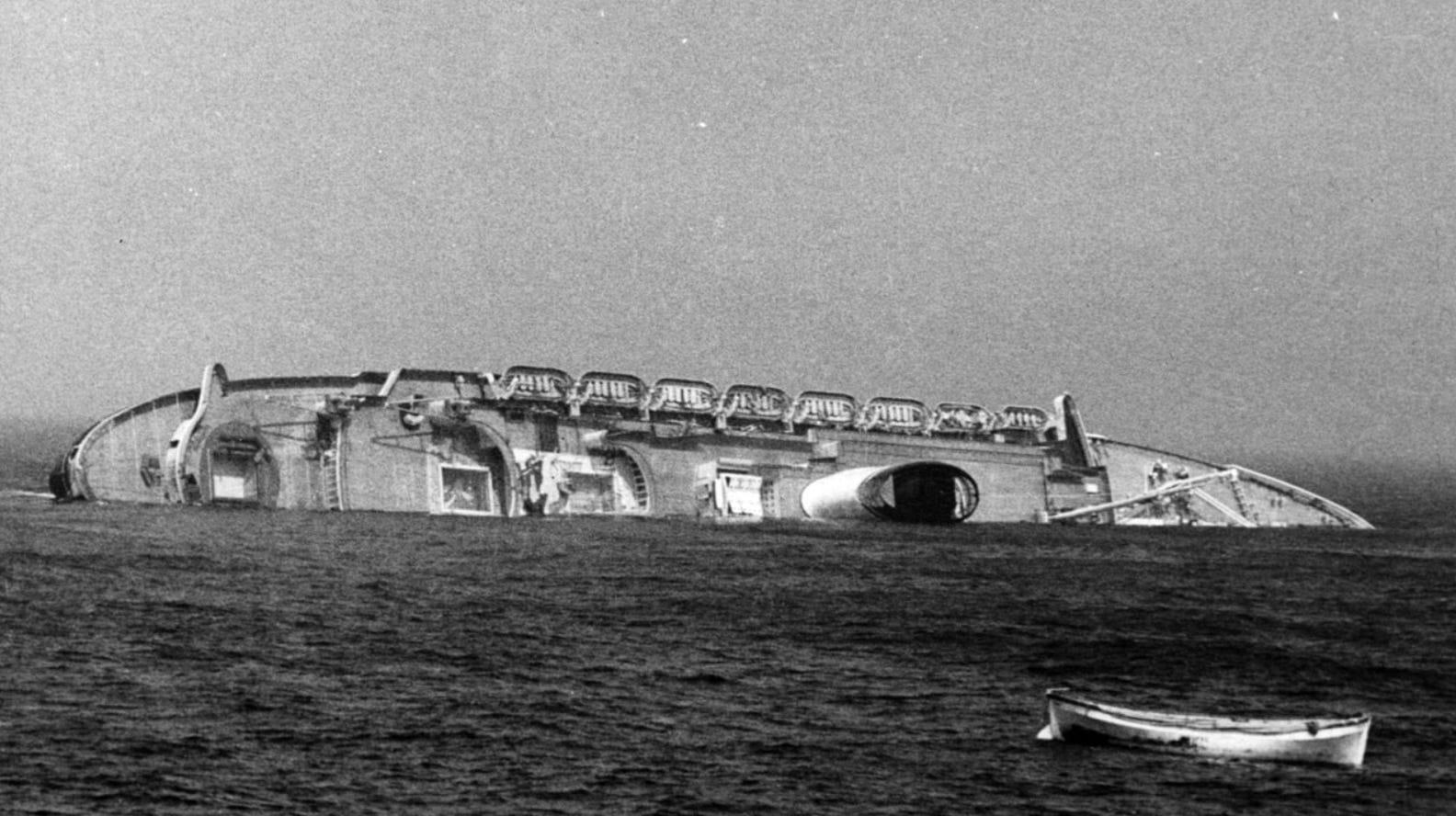
Fortunately, on this planet, everything ends, and even Ami, tired of blowing, deflates, and in the cold of 50 degrees north latitude, she runs out of steam, leaving room for a thick fog that barely allows us to see the bow pulpit, 18 meters ahead. We are on the banks of Newfoundland, a cod fishing ground for immense fishing fleets from various nations, where, at 70 meters below sea level, lies the wreck of the Andrea Doria, sunk after the The ramming of the Swedish merchant ship Stockholm on July 26, 1956. We advanced at good speed, piercing the fog, hoping not to encounter a Norwegian fishing vessel, a Portuguese fleet, or the Canadian hosts. Finally, the fog suddenly lifted, and miracle! We could see each other for miles and miles. The surprise was to find ourselves among dozens of Danish fishing boats surrounding a factory ship full of funnels, steam rising that smelled of cod. We were lucky; the fog wasn’t packed with boats on our route. Of the 2,912 miles of the crossing, we’d covered about 900. We still had another two-thirds of ocean to cover.
Listen to the podcast 👇

While we were in the hatch, battling foul odors and Jeff’s inappropriate offerings of crispy bacon, drifting at two knots toward nowhere, Kialoa III was making 350 miles a day on course, and Robin, a 43-footer, was following close behind. The rest of the crossing was smooth and comfortable, with westerly winds, as per the plotting chart, ideal for the schooner rig of the CS&RB II Busnelli, which could show off its best sail kit for downwind sailing, consisting of a full mainsail, forestay, fisherman, and heavy Genoa. We were sailing at 8 to 12 knots, with a good daily pace of around 200 miles a day. In another 10 days, we’ll be in England. The atmosphere on board is refreshing. Everyone’s trying to spot some marine life, from playful dolphins snaking their way alongside us, brushing the bow by just a few inches, zigzagging from starboard to port, to a mighty sperm whale that comes alongside us, matching our course and speed, and following us with a few snorts. Don’t worry. We’re not the Pequod, and the skipper isn’t Captain Ahab. You can dive in peace and hunt for giant squid.
Jeff, happy that everyone’s back to holding their food, returns with his succulent offerings, featuring crispy bacon alongside scrambled eggs. A decidedly Anglo-Saxon breakfast, which even pleases David. Aimaro, a bratty boy, teases and teases him, and David, like a good American accustomed to such treatment, places him on his lap and good-naturedly gives him a good spanking, to the astonished amusement of the others and the smiling—but not overly so—consternation of his sister. In these last days of our quiet crossing, Carla Daniela and I are trying to complete the personalized school program for our two students from different classes, before the imminent resumption of regular school in September.
And finally, with the same joy and enthusiasm that made us rejoice on the first crossing at the sight of the low-lying island of Barbados, now a chorus of cheers erupts on deck at the barely perceptible sight of the very low-lying Scilly Isles, the gateway to the west of Lizard Point, the western tip of the Cornish peninsula. We’ve returned to dear old Europe, welcomed by dear old England. We jokingly call the islands we leave to port as we enter the English Channel the “Silly Isles,” a play on the assonance Scilly-silly. Jeff understands the pun and teaches us that in English, they say pun, and when someone makes a pun, others exclaim “very punny” instead of “very funny.” A pun within a pun. English humor that David struggles to understand. He’s American...
Stories like this are the heartbeat of Yacht Lounge. If you value this level of insight, join our 3,800 active readers to receive weekly perspectives you won’t find anywhere else.
Next sighting: The Needles, the sharp white rocks that extend westward from the western tip of the Isle of Wight. From the cockpit, a chant rises: “Do you know what the Isle of Wight is? For us, it’s the island of those who have the blue of youth in their eyes, of those who sing, hippy-hippy-py, hippy-py...” a 1970 Dick Dick song. We couldn’t have sung a better soundtrack for the finish.
We’re moored at Cowes Yacht Haven, in the sailing heart of the town, surrounded by competitors in the Transatlantic Race and the teams competing in the Admiral’s Cup. The race was won by Robin on corrected time and by Kialoa III in line.
From the New York Times, July 21, 1975: “Robin, Ted Hood’s new blue sloop of Marblehead, Mass., won the Transatlantic Race from Newport, Rhode Island, beating Kialoa, which had finished first, by 65 minutes on corrected time.
Kialoa, a 79-foot yawl that completed the crossing in 15 days last Tuesday, had to give Robin, a 43-footer, the smallest boat in the fleet of nine, a recovery time of 104 hours. Robin, owned by Ted Hood himself, was skippered by Lee Van Gemert in Hood’s absence. The final corrected times, in hours and minutes, for the finishers were: Robin, 357:41; Kialoa, 358:47; Kirsten, 383:20; Gitana VI, 386:22; Tantara, 410:03; CS and RB II, 416:19; Adele, 416:25; Weald II, 424:29, and Rasmus II, 425:05.”
We finish the race sixth out of nine. We’re satisfied given the quality and strength of the favorites, given the modest competitiveness of CS&RB II Busnelli, and given the crew, which compared to Kialoa III’s is like an elementary school class compared to university students. Jeff is happy back home, and, putting on his wrinkled blazer, runs to the pub for a pint of lager.
by Roberto Franzoni
(English translation and editing: Elena Paxia)
(Italian Follows)
✦ To be continued in the next episode…
Yacht Lounge grows through word of mouth among curious minds. If this story inspired you, share it with those who navigate your same routes.
Oceano Segreto.
Chapter 10. CS&RB II -La Transatlantic Race e l’uragano Ami
L’equipaggio del CS&RB II Busnelli si rinforza per la prima regata che affronteremo, in partenza da Newport con arrivo a Cowes, nell’isola di Wight, capitale della vela inglese, dove il 22 agosto 1851 nacque l’America’s Cup, vinta dalla goletta America, che portò la “Coppa delle 100 Ghinee”, detta poi “la brocca”, sulla sponda atlantica degli Stati Uniti e più precisamente nelle sale del prestigioso ed esclusivo New York Yacht Club, dove ancora nel 1975 è vietato l’ingresso alle signore.
A Cowes si svolge anche l’Admiral’s Cup che dal 1957 al 1999 venne disputata fra squadre nazionali, ognuna delle quali era costituita da tre imbarcazioni. Monopolio prevalente delle squadre inglesi e americane, con qualche incetta della squadra tedesca, verrà vinta nel 1995 per la prima volta dal team italiano, formato da Capricorno di Rinaldo Del Bono timonato da Flavio Favini, Brava Q8 di Pasquale Landolfi, timonato da Francesco de Angelis, e da Mumm a Mia! di Paolo Gaia timonato da Tommaso Chieffi.
I partecipanti alla Transatlantic Race sono nove, con tre fuoriclasse come Kialoa III di Jim Kilroy, Gitana VI del barone Edmund de Rotschild e Robin di Ted Hood, progettista e velaio.
Se vuoi leggere la puntata precedente… 👇
Agli otto presenti a bordo, ma due sono i bambini, si aggiungono Luigi, arrivato fresco fresco dall’Italia, per vivere la sua prima transatlantica e David, un amico di Chin, proveniente da Chicago, inesperto di vela, ma giovane, robusto ed entusiasta del battesimo oceanico. Ha un’aria da intellettuale ebreo, è gay è molto simpatico e socievole. Apprende la terminologia, che il maestro Jeff gli insegna con burbera pazienza. I due caratteri non potrebbero essere più diversi.
Luigi è romano, è giovane come Paolo, è figlio di un amico del nostro amico Riccardo Tosti, concessionario delle barche a vela Barberis. Ha fatto regate in Tirreno, ma qui siamo in Atlantico. Il rinforzo d’equipaggio, francamente non è un gran che.
Dopo l’ultimo panino da Sloppy Joe’s, condiviso con i nuovi arrivati e bagnato da abbondanti lattine di Budweiser, prepariamo la barca per una traversata che non sarà dolce e liscia come quella da est a ovest negli alisei. Qui siamo a 41 gradi di latitudine Nord, dovrebbero soffiare correnti occidentali e quindi dovremmo essere ancora spinti da venti portanti, ma niente è definitivo, come negli alisei.
Infatti il meteo non promette niente di buono. Usciamo dalla baia di Narragansett con arie leggerissime di direzione variabile, come fossimo nel Golfo del Tigullio. Ma per rendere più complessa la partenza, cala una sgradevole nebbiolina che rende tutto il contorno di mare e cielo grigio, indistinto, ovattato. Usciti dalla baia dobbiamo superare il canale tra le due isole più famose della zona, Martha’s Vineyard e Nantucket, nell’Ottocento porti di armamento della consistente flotta baleniera che ispirò Hermann Melville per la stesura del romanzo Moby Dick, la saga della balena bianca, e in tempi recenti rifugio dorato ed esclusivo dell’upper class Wasp (White Anglo-Saxon Protestant), ovvero i discendenti dei primi immigrati anglosassoni nel New England, considerati i rappresentanti della cultura egemone e del potere reale negli Stati Uniti, come i Kennedy. Quindi superato Cape Cod, che chiude il golfo dove sorge Boston puntiamo verso la costa di Nova Scotia e quindi di Terranova per seguire poi l’ortodromica che sale a 55 gradi di latitudine nord per scendere ai 50 gradi di Cowes e dell’isola di Whight.
La rotta ortodromica è la più breve tra due punti su una superficie sferica come la Terra, con buona pace dei contemporanei terrapiattisti. La rotta interseca i meridiani con angoli sempre diversi, a differenza dalla rotta lossodromica che li interseca tutti con lo stesso angolo, come rappresentato dalla proiezione di Mercatore, ovvero delle carte nautiche che usiamo, che deformano la proiezione terrestre al crescere della longitudine. L’esempio più eclatante è la rappresentazione della Groenlandia che appare nelle carte nautiche come più grande del Nord America. La lossodromica è più facile da seguire mantenendo uguale l’angolo coi meridiani, ma è più lunga.
Impegnati in queste discussioni scientifico-navigatorio-filosofiche procediamo molto lentamente e ascoltando la radio e le posizioni dei favoriti, ci rendiamo conto che hanno macinato una quantità di miglia notevole rispetto a noi. Il CS&RB II Busnelli non è forte con arie leggere. È pesante 27 tonnellate e poco invelato. Robin è leggero e Kialoa III è potentissimo. Collochiamo sulla plotting chart del nord Atlantico la posizione dei tre favoriti e vediamo che si stanno tenendo al largo di Nova Scotia. Ascoltando il bollettino meteo cominciamo a capire perché. Dopo la bonaccetta, la nebbiolina e il mare grigio come il piombo sta arrivando la coda inaspettata del primo uragano della stagione, Ami, in un tempo in cui gli uragani avevano ancora solo il nome di donna. Gli esponenti del patriarcato giustificano il perché. È tutto anormale. Il mese e la latitudine. Un adagio americano sugli uragani recita: “June too soon, July don’t try, August the worst, September remember, October all over (giugno è troppo presto, luglio non tentare, agosto il peggiore, settembre stai attento, ottobre è tutto finito). E poi l’uragano è tropicale, dovrebbe stare tra i 15 e i 25 gradi di latitudine. Che ci fa a 40? E invece lei, Ami, ignara e irrispettosa delle regole e degli adagi, sale e sale e sale, ma non perde forza. Sono previsti venti fino a 80 nodi, forza 1 della scala Saffir-Simpson di misurazione dell’intensità dei cicloni tropicali. Nessuno sembra preoccuparsene, tranne lo skipper e me, che ricordo una frase sinistra del Bowditch, autore di “The New American Practical Navigator” il manuale dell’ufficiale di rotta americano che recita: “l’incontro ravvicinato con un uragano tropicale è un’esperienza impossibile da dimenticare”. Che cosa ci aspetterà, con due bambini, una giovane donna poco esperta e due neofiti?
Ecco il podcast di Oceano Segreto. 👇

Il vento arriva e incomincia a rinforzare, spingendo nubi sinistramente cupe e nerastre. Incomincia pure a piovere. Ma non proprio pioggia. Scrosci, che con linguaggio meteo-folcloristico contemporaneo si chiamerebbero bombe d’acqua. Cortine d’acqua limitano la visibilità a pochi metri. Raffiche ululanti sibilano tra il sartiame attorno al quale è rimasta solo la vela di strallo da 350 grammi/metro quadro, robusta come una lastra di alluminio. Il vento è girato a Est e ci costringe a bordi piatti, can mure a dritta verso Halifax, la capitale di Nova Scotia, o con prua sud con mure a sinistra. Disastroso. Decidiamo con lo skipper e Jeff di mettere il CS&RB II Busnelli in cappa, cazzando a ferro la vela di strallo e mettendo il timone all’orza. La goletta sconquassata dalle onde mantiene un angolo di circa 70 gradi col vento, scarrocciando di circa due nodi e avanzando di altrettanti.
L’equipaggio è a pagliolo. Il divertente cicaleccio di lingue miste, dal gallese di Jeff all’americano di Chicago di David, all’accento romano di Luigi, alle voci argentine dei bambini è diventato un monocorde lamento proveniente da prua, da dritta e da sinistra.
La barca è chiusa sigillata per cercare di tenere fuori gli scrosci d’acqua. All’interno l’odore di sentina si mescola a quello del sudore, delle scoregge, dei panni bagnati, del vomito, formando un effluvio rancido e nauseabondo che contribuisce a provocare altro vomito a cui tutti concorrono. Tutti tranne Jeff, che inattaccabile dalla furia di Ami, si aggira per la barca cercando di assistere i più malandati e offrendo due proposte assolutamente inaccettabili: “would you like a cup of tea or some slice of fried crispy bacon?”. Poiché vien allontanato in malo modo dai sofferenti, si rifugia in cucina, dove scalda dell’acqua per il suo personale rito del tè – d’altronde sono le 4 del pomeriggio, tea time – e in un padellino si scalda una busta intera di bacon, ben rosolato, il cui odore si aggiunge all’olezzo di barca chiusa combinando un tanfo composito, per il disgusto degli altri nove.
Per fortuna su questo pianeta tutto finisce e anche Ami, stanca di soffiare, si sgonfia e col freddo dei 50 gradi di latitudine nord si esaurisce, lasciando il campo a una fitta nebbia che ci fa vedere a mala pena il pulpito di prua, 18 metri più avanti. Siamo sui banchi di Terranova, terreno di pesca del merluzzo da parte di immense flotte pescherecce di varie nazioni, sul cui fondo a 70 metri giace il relitto dell’Andrea Doria, affondata dopo lo speronamento del mercantile svedese Stockholm il 26 luglio 1956. Avanziamo a buona velocità, forando la nebbia con la speranza di non trovarvi dentro un peschereccio norvegese o una flotta portoghese o i padroni di casa canadesi. Finalmente la nebbia si alza, di colpo, e miracolo! ci vediamo per miglia e miglia. La sorpresa è di trovarsi in mezzo a decine di pescherecci danesi che circondano una nave officina piena di fumaioli, da cui esce un vapore all’odor di merluzzo. Ci è andata bene, la nebbia non era imbottita di barche sulla nostra rotta. Delle 2.912 miglia di traversata ne abbiamo percorse circa 900. Ci rimangono altri due terzi di oceano da coprire.
Mentre noi eravamo in cappa lottando con mefitici tanfi, con le inappropriate offerte di crispy bacon di Jeff, scarrocciando a due nodi verso il nulla, Kialoa III percorreva 350 miglia al giorno in rotta e Robin, di 13 metri, lo tallonava a poca distanza. Il resto della traversata è liscio e confortevole, con venti occidentali, come da plotting chart, ideali per l’armo a goletta del CS&RB II Busnelli, che può sfoggiare il suo miglior corredo di vele per le andature portanti, composto da randa piena, vela di strallo, fisherman e genova pesante. Navighiamo tra gli 8 e i 12 nodi, con buoni ritmi giornalieri intorno alle 200 miglia al giorno. In altri 10 giorni saremo in Inghilterra. Il clima a bordo è rinfrancato. Tutti cercano di avvistare qualche protagonista di vita marina, dai giocosi delfini che intrecciano le loro rotte con la nostra sfiorando la prua di pochi centimetri, zigzagando da dritta a sinistra, a un poderoso capodoglio che ci affianca, si mette sulla nostra stessa rotta e velocità e ci segue con qualche sbuffo. Tranquillo. Non siamo il Pequod, e lo skipper non è il capitano Achab. Puoi immergerti serenamente alla caccia del calamaro gigante.
Jeff, felice che tutti siano tornati a trattenere il cibo nello stomaco torna con le sue succulente proposte in cui il crispy bacon è affiancato da uova strapazzate. Una colazione decisamente anglosassone, che soddisfa anche David. Aimaro, monello, lo stuzzica e gli fa i dispetti e lui, da buon americano aduso al trattamento, se lo mette sulle ginocchia e gli impartisce con bonomia una buona sculacciata, con stupito divertimento degli altri e sorridente costernazione – ma non troppo – della sorella. Carla Daniela e io in questi ultimi giorni di quieta traversata cerchiamo di concludere il programma scolastico personalizzato per i due scolari di classi diverse, prima dell’imminente ripresa scolastica regolare di settembre.
Storie come questa sono il cuore di Yacht Lounge. Se apprezzi questo tipo di narrazione, unisciti ai nostri 3.800 lettori attivi per ricevere ogni settimana approfondimenti che non troverai altrove.
E finalmente, con la stressa gioia ed entusiasmo che nella prima traversata ci fece esultare vedendo il basso profilo di Barbados, ora fa esplodere in coperta un corale urrà alla vista appena percettibile delle bassissime isole Scilly, cancello di ingresso posto a ovest di Lizard Point, la punta occidentale della penisola della Cornovaglia. Siamo ritornati nella cara vecchia Europa accolti dalla cara vecchia Inghilterra. Le isole che lasciamo a sinistra entrando nella Manica le chiamiamo scherzosamente le “isole Sciocche” giocando sull’assonanza Scilly – silly. Jeff afferra il gioco di parole e ci insegna che in inglese si dice pun e quando uno fa un gioco di parole gli altri esclamano “very punny”, invece di “very funny”. Gioco di parole col gioco di parole. Humor inglese che David fa fatica a capire. È americano…
Prossimo avvistamento i Needles i bianchi scogli aguzzi che si allungano verso ovest dalla punta occidentale dell’isola di Whight. Dal pozzetto sale il canto: “Sai cos’è l’isola di Wight? È per noi l’isola di chi, ha negli occhi il blu della gioventù, Di chi canta, hippy-hippy-py, hippy-py…” canzone dei Dick Dick del 1970. Colonna sonora migliore per l’arrivo non potevamo intonare.
Siamo ormeggiati al Cowes Yacht Haven, nel cuore velico del paese, circondati dai concorrenti della Transatlantic Race e dalle squadre che partecipano all’Admiral’s Cup. La regata è stata vinta da Robin in tempo compensato e da Kialoa III in tempo reale.
Dal New York Times del 21 luglio 1975: “Robin, il nuovo sloop blu di Ted Hood di Marblehead, Massachusetts, ha vinto la regata Transatlantica da Newport, Rhode Island, battendo Kialoa, che era arrivato primo, con 65 minuti di vantaggio in tempo compensato.
Kialoa, uno yawl di 79 piedi che ha completato la traversata in 15 giorni martedì scorso, ha dovuto concedere a Robin, un 43 piedi, la più piccola imbarcazione della flotta di nove, un tempo di recupero di 104 ore. Robin, di proprietà dello stesso Ted Hood, era comandato da Lee Van Gemert in assenza di Hood.
I tempi compensati finali, in ore e minuti, per i finalisti sono stati: Robin, 357:41; Kialoa, 358:47; Kirsten, 383:20; Gitana VI, 386:22; Tantara, 410:03; CS e RB II, 416:19; Adele, 416:25; Weald II, 424:29, e Rasmus II, 425:05”.
Concludiamo la regata sesti su nove. Siamo soddisfatti data la qualità e forza dei favoriti, data la modesta competitività di CS&RB II Busnelli e dato l’equipaggio che in confronto a quello del Kialoa III è come se fosse una classe di scuola elementare rispetto a studenti universitari. Jeff è felice, in patria, e indossato il blazer, stropicciato, corre al pub a farsi una pinta di lager.
by Roberto Franzoni
✦ Continua nella prossima puntata…
Yacht Lounge cresce grazie al passaparola tra menti curiose. Se questo articolo ti ha ispirato, condividilo con un amico.