

🇺🇸🇮🇹 Bilingual content: English first, Italian follows
Norfolk is a small city with only 250,000 inhabitants, but it is the base for U.S. Navy naval units operating in the Atlantic, Mediterranean, and Indian Oceans, and is also the headquarters of the United States Fleet Forces Command. It has the largest concentration of naval air forces in the U.S. Navy, with 75 ships along 14 piers and 134 aircraft and 11 aircraft hangars at the adjacent Chambers Field. Port services control more than 3,100 ship movements arriving and departing from their berths each year. It conducts over 100,000 flight operations annually, an average of 275 flights per day, or one every six minutes. Over 150,000 passengers and 264,000 tons of mail and cargo depart annually at the direction of Air Mobility Command.
Its location at the mouth of the Elizabeth River and its rugged coastline at the mouth of the deep Chesapeake Bay make the bay safe and well-protected, and consequently the U.S. Navy base, which has wisely concentrated most of its Atlantic-bound vessels in these waters.
Like all cities with a military vocation, it has no major attractions, other than those tied to its history, memorabilia, and testimonies of its military life.
We were fortunate to be hosted at the private dock of an acquaintance of Jeff’s, right in the historic center of Norfolk, with water and electricity. It’s the only charming area of the city, with its old red brick houses and cobblestone streets, a European feel, and where you can already feel a hint of New England. This is the area we’re headed to, our last American stop before the next transatlantic leap, specifically Newport, the home of the America’s Cup.
Not far from our fortunate mooring—and every now and then a little luck doesn’t hurt—is one of the attractions of the Navy’s military town, the decommissioned battleship USS Wisconsin, now a museum ship. You can take a tour of the ship’s interior, including the sleeping quarters, the infirmary, the sonar room, the mess hall, the main deck, the engine room, and the captain’s cabin. The children are thrilled, but so are Daniela and my love of tourism and exploration. A glimpse of life on board during World War II, like in a Hollywood film, like “The Caine Mutiny,” starring Humphrey Bogart as the psychopathic Philip Francis Queeg, commander of the minesweeper.
Our captain, on the contrary, returns aboard with a different spirit after more than a month spent in Chicago in the arms of his sweetheart. The smile has returned to his face, his spirits have risen from beneath the soles of his shoes, shining in his eyes as blue as the sky, his personal Cloud Nine, where he is now.
Listen to the podcast 👇

We introduce Jeff, jokingly telling the skipper that we recruited him in a seedy harbor bar, getting him drunk and knocking him unconscious with a blow to the head with a stick to bring him aboard, like Royal Navy recruiters did to recruit reluctant hands to maneuver the hundreds of miles of sheets, halyards, and ropes aboard sailing ships of the 18th and 19th centuries.
He didn’t believe it and got Jeff to tell him the true, but much more banal, story. The two immediately connected. Maybe it was the blue eyes, the blond hair, the same height, the same age. Flashes of sympathy. Oh, thank goodness... It was just missing to dislike each other. We’d already had enough conflicts on board.
Norfolk is at the mouth of the 125-mile-deep Chesapeake Bay, where the Potomac River flows into Washington. It’s the birthplace of the catboat, a particular 25 to 30 foot flat-hulled fishing boat rigged with only a mainsail peaked on a mast positioned at the very bow. The boat is depicted in a suggestive painting by Winslow Homer, an American painter and watercolorist from New England, influenced by Impressionism and who dedicated many works to the sea, entitled Breezing Up, which depicts a catboat with a Grandfather and three grandchildren, the eldest at the helm, with the boat full of fish. A typical late 19th-century scene. The painting is housed in the National Gallery of Art in Washington.
The cultured, art-loving crew members try to convince the skipper to point the bow toward Washington, the capital of the United States, but resistance is at its utmost, because New York, the capital of the world, is just 245 miles away, and the skipper is dying to pass under the Brooklyn Bridge in the CS&RB II Busnelli. We share, and Daniela and I ask only for a day off to visit Washington, its monuments, and its museums, including the National Air and Space Museum, where the original pieces from the moon landing are preserved in a large diorama. The only curious note: next to the American flag, held unfurled by a horizontal pole—since there’s no wind on the moon—is the caption “replica,” given that the original remained on our satellite. American precision and honesty.
Here you can find the link to the previous episode 👇

The sail to the mouth of New York Harbor is calm, with predominantly westerly winds. It’s a chance for the skipper and Jeff to reconnect, recount real or imagined sea adventures, share copious amounts of Budweiser, America’s most popular beer, and, like Yanez, the Portuguese in the Sandokan saga, light up yet another cigarette, mostly lit from the butt of the previous one, a shared gesture that conncts the two sailors.
When the Manhattan skyline begins to emerge on the horizon, jubilation erupts on board and spreads to the children, thrilled to disembark from a sailboat in the Big Apple.
But not everything goes smoothly. Taking the passage between Staten Island to port and Coney Island to starboard, we head for the Statue of Liberty, which greets those entering the city by sea. It was designed by Frenchman Auguste Bartholdi, with the collaboration of Gustave Eiffel, who designed the internal steel structure, connected to the exterior with a cladding of shaped and riveted copper sheets. It was donated to the city by the French government and inaugurated on October 28, 1886, as a celebration of the freedom of all peoples. We pay respectful tribute to the monumental green lady, of which there are five others in Paris. The most famous is the one near the Grenelle Bridge, at the end of the Île aux Cygnes along the Seine. It is only 11.50 meters high, compared to the American one’s 93 meters, and is located right near Auguste Bartholdi’s old laboratory.
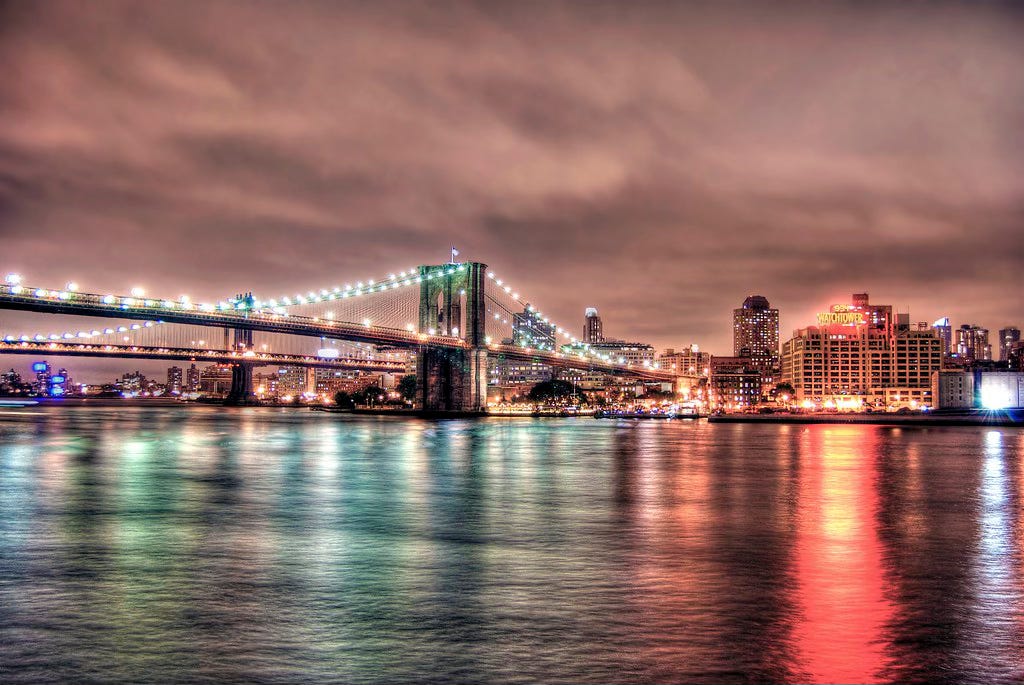
The Brooklyn Bridge looms before our eyes, and as we admire its silhouette, we realize that the East River has a difficult stream to manage. We remind the skipper of the misadventure on the Saint John River in Florida. We’re heading for the docks of South Street Seaport, a small area in Lower Manhattan, between the Financial District and the Brooklyn Bridge. This old port area overlooks the East River, lined with bars and shops, and complements the marvel of the Brooklyn Bridge looming above.
South Street Seaport is certainly an atypical area compared to the rest of Manhattan: the old red brick buildings and historic sailing ships moored on the adjacent Pier 17 contrast with the skyscrapers surrounding this fascinating area of New York. It’s clear we’re attempting an illegal mooring, made even more difficult by the current and the lack of power of our Perkins 4.108, which can only count on 49 horsepower. But thanks to the skipper’s expertise and the muscle strength and agility of Jeff, Paolo, and myself, we’re at the dock. But the wrong one. Pier 17 is a museum with a large three-masted sailing ship, a lightship, and an evocative late-19th-century port atmosphere. We’re immediately chased away with insults by security, who direct us across the water to Brooklyn’s Pier 5, where there’s a small marina where we dock, alongside, with just as much difficulty, with a beautiful view of the Brooklyn Bridge and Lower Manhattan with its forest of skyscrapers in the Financial District. Not bad, but we wanted to disembark at the South Street Seaport and go shopping at Abercrombie, the trendiest label of the moment. We have to walk the entire Brooklyn Bridge, like in the New York Marathon, 6 kilometers, 90 minutes on foot. But there’s a convenient ferry that satisfies in only half an hour, the urge to spend, especially for the ladies. The skipper ignores these urges and stays on board, gazing ecstatically at the deck, lighting yet another cigarette with Jeff.
Before embarking on the 140 miles that will take us to Newport, Rhode Island, the final destination on the American leg of the journey, we must face the engaging navigation along the East River to enter the waters of Long Island Sound. We study the tide table, kindly provided by the marina office, and the stream reversal to avoid the risk of finding ourselves in turbulent water at 5 knots. The navigation under the series of bridges and through the forest of skyscrapers of the Big Apple is unforgettable.
Stories like this are the heartbeat of Yacht Lounge. If you value this level of insight, join our 3,800 active readers to receive weekly perspectives you won’t find anywhere else.
After seven bridges, we finally reach the last one, the Throgs Neck Bridge, which marks the exit gate from the East River and the entrance to the 80 miles of Long Island Sound. We can finally raise the sails, much to the relief of skipper Jeff and I, who had been apprehensive about motoring through these busy waters, complicated by currents and countercurrents at every bend in the river.
Long Island Sound closes to the east with a narrow strait just three miles wide between Little Gull Island and Race Rock Lighthouse. Having negotiated this passage with light breezes from shore, allowing us to expose all our linens—mainsail, topsail, forestay, and spinnaker—to the sun, in 35 miles we reach the mouth of the deep and rugged Narragansett Bay, where Newport is located. Rhode Island, the smallest state in the Union, boasts a population of just one million, but a long and glorious history, having been one of the thirteen colonies to declare independence from the British Empire in 1776.
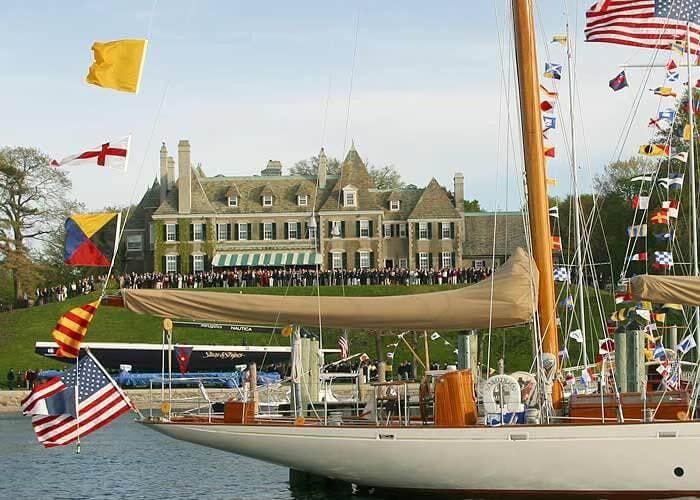
Newport prides itself on being the sailing capital of the world and is certainly one of the most important tourist ports in the United States. The America’s Cup was contested in Newport from 1930 to 1983, and today it remains the starting point for the recurring offshore race, the Newport Bermuda Race. Several sailing clubs have headquarters in the city, starting with the New York Yacht Club, which was a key player in the America’s Cup throughout its history. The Cup’s most illustrious helmsmen were celebrated here, from Bus Mosbacher to Bill Ficker, from Ted Turner to Dennis Conner. It’s no coincidence that the city is home to America’s Cup Avenue, which encircles the city’s nautical center, facing the more exclusive Goat Island.
When the horizon ceases to be just open sea and the unmistakable silhouette of Newport comes into view, you realize you haven’t just reached any port, but the very temple where sailing legend makes its home. 👇

Eight years after this 1975 edition, in the 25th edition of the Cup in 1983, after 24 editions dominated by American boats and a monopoly on the New York Yacht Club, the “jug” would migrate to Australia, powered by the unbeatable Australia II, designed by Ben Lexcen and masterfully sailed by John Bertrand. For the first time in history, an Italian boat will participate in this edition: Azzurra, designed by Andrea Vallicelli, skippered by Cino Ricci, and sponsored by a consortium headed by Gianni Agnelli and the Aga Khan Karim. It will reach the semifinals, instilling unprecedented enthusiasm for sailing in Italy.
We moor right at Goat Island Marina, proud of our elegant schooner CS&RB II Busnelli, which, with its heart-shaped stern and rudder blade barely protruding from the water, with a curl engraved on the tip, is a match made in heaven among famous boats like Jim Kilroy’s 24-meter Kialoa III, a 1974 Sparkman & Stephens design, built of aluminum by Palmer Johnson; the smaller Robin, a 13-meter two-tonner designed and rigged by Ted Hood, one of America’s most renowned designers and sailmakers; and the 20-meter Gitana VI, a Sparkman & Stephens design, built by the Dutch boatyard Huisman, owned by Baron Edmund de Rothschild. They are the favorites in the Transatlantic Race, which departs Newport on June 25th for the Isle of Wight, England, and will bring us back to Europe. For now we scatter among the narrow streets and piers of the sailing town, we let ourselves be fascinated by the yacht chandler and marine clothing shops, but we don’t disdain to stop in one of the dozens of coffee shops or bars along the docks of the waterfront of Newport, such as Sloppy Joe’s Bar and Restaurant in Riverboat Row, where you can enjoy a Sloppy Joe, a sandwich of meat cooked with tomato sauce, a kind of ragout, particularly succulent. With full bellies, we’re ready to face the Atlantic again. But the conditions will be very different.
by Roberto Franzoni
(English translation and editing: Elena Paxia)
✦ To be continued in the next episode…

Yacht Lounge grows through word of mouth among curious minds. If this story inspired you, share it with those who navigate your same routes.
Oceano Segreto Chapter 9. CS&RB II - New York e Newport
Norfolk è un a piccola città di soli 250 mila abitanti, ma è la base delle unità navali della U.S. Navy che operano nell’Atlantico, nel Mediterraneo e nell’oceano Indiano ed è anche la sede dello United States Fleet Forces Command. Ha la più grande concentrazione di forze aeronavali della Marina statunitense, con 75 navi lungo 14 moli e con 134 aerei e 11 hangar per aerei presso l’adiacente Chambers Field. I servizi portuali controllano ogni anno più di 3.100 movimenti di navi in arrivo e in partenza dai loro ormeggi. Effettua oltre 100.000 operazioni di volo ogni anno, una media di 275 voli al giorno o uno ogni sei minuti. Oltre 150.000 passeggeri e 264.000 tonnellate di posta e merci partono ogni anno su disposizione dell’Air Mobility Command.
La sua posizione alla foce dell’Elizabeth River, la frastagliatura delle coste, situate all’imbocco della profonda Chesapeake Bay rendono sicura e ben protetta la baia e di conseguenza la base della Marina statunitense, che sapientemente ha concentrato in queste acque la maggior parte del naviglio rivolto all’operatività in Atlantico.
Come tutte le città a indirizzo militare non ha grandi attrazioni, se non legate proprio alla storia, ai memorabilia e alle testimonianze della sua vita militare.
Abbiamo avuto la fortuna di essere ospitati nel molo privato di un conoscente di Jeff, proprio nel centro storico di Norfolk, con acqua ed elettricità, unica area un po’ di charme della città, con le sue vecchie case in mattoni rossi e le sue strade acciottolate, di sapore europeo, e dove si respira già un po’ di aria “New England”, l’area verso cui siamo diretti, ultima meta americana prima del prossimo balzo transatlantico e in particolare a Newport, la patria dell’America’s Cup.
Non distante dal nostro ormeggio fortunato – e ogni tanto un po’ di fortuna non guasta – si trova una delle attrazioni della città militare della Marina, la corazzata USS Wisconsin dismessa, che ora funge da nave museo. Si può fare un tour degli interni della nave come la zona notte, l’infermeria, la sala sonar, la mensa e il ponte principale, la sala macchine e la cabina del Comandante. I bambini ne sono entusiasti, ma anche lo spirito turistico e conoscitivo mio e di Daniela ne rimangono attratti. Uno scorcio di vita di bordo ai tempi della seconda guerra mondiale, come in un film hollywoodiano, del genere “L’ammutinamento del Caine” con un Humphrey Bogart nel ruolo dello psicopatico Philip Francis Queeg, comandante del dragamine.
Il nostro comandante invece rientra a bordo con un altro spirito dopo più di un mese passato a Chicago tra le braccia della sua bella. Il sorriso è tornato sul suo volto, l’umore è risalito da sotto le suole delle scarpe alla luce dei suoi occhi azzurri come il cielo, settimo in particolare, dove si trova adesso.
Gli presentiamo Jeff, raccontando scherzosamente allo skipper che lo abbiamo reclutato in un malfamato bar del porto, facendolo ubriacare e facendolo svenire con un colpo di bastone in testa per portarlo a bordo, come facevano i reclutatori della Royal Navy per raccattare riluttanti braccia a cui far manovrare le centinaia di chilometri di scotte, drizze, gomene a bordo dei velieri del Sette e Ottocento.
Non ci ha creduto e si è fatto raccontare la storia vera, ma molto più banale, da Jeff. Tra i due si è stabilito subito un contatto. Saranno gli occhi azzurri, i capelli biondi, la stessa statura, la stessa età. Guizzi di simpatia. Fuiiii, per fortuna… Ci mancava solo che non si piacessero. Conflitti a bordo ne avevamo già avuti abbastanza.
Ascolta il podcast 👇

Norfolk è all’imbocco della Chesapeake Bay, profonda 125 miglia e in cui sfocia il fiume Potomac, che bagna Washington. È la culla del cat boat, curiosa barca da pesca di 8-10 metri a scafo piatto, armata con la sola randa col picco su un albero posizionato all’estrema prua. La barca è raffigurata in un suggestivo dipinto di Winslow Homer, pittore e acquerellista americano del New England, di influenza impressionista, che ha dedicato molte opere al mare, intitolato Breezing up, in cui è raffigurato un cat boat con a bordo un nonno e tre nipotini, di cui il maggiore al timone, con la barca piena di pesci. Una tipica scena di fine Ottocento. Il quadro è conservato alla National Gallery of Art di Washington. I membri colti dell’equipaggio appassionati di arte provano a convincere lo skipper a puntare la prua su Washington, la capitale degli Usa, ma la resistenza è massima, perché a sole 245 miglia c’è New York, la capitale del mondo, e lo skipper muore dalla voglia di passare sotto il Brooklyn Bridge col CS&RB II Busnelli. Condividiamo e Daniela e io chiediamo solo un giorno di libera uscita per visitare,Washington, i suoi monumenti e i suoi musei tra cui il National Air and Space Museum dove sono conservati in un grande diorama i pezzi originali dello sbarco sulla luna. Unica curiosa nota, a fianco della bandiera americana tenuta spiegata da un’asticella orizzontale, poiché sulla luna non c’è vento, campeggia la didascalia “replica”, dato che l’originale è rimasta sul nostro satellite. Precisione e onestà americana.
La navigazione fino all’imbocco del porto di New York è tranquille, con venti prevalentemente occidentali e serve allo skipper e a Jeff per famigliarizzare, raccontarsi avventure vere o presunte di mare, condividere grandi quantità di Budweiser, la birra americana più apprezzata, e accendersi come Yanez, il portoghese della saga di Sandokan, l’ennesima sigaretta, prevalentemente accesa col mozzicone della precedente, gesto condiviso e accomunante dei due navigatori.
Qui trovate l’episodio precedente 👇
Quando all’orizzonte si comincia a profilare lo skyline della selva di grattacieli di Manhattan il giubilo esplode a bordo e contagia anche i bambini, eccitatissimi di sbarcare da una barca a vela nella Grande Mela.
Ma non va tutto liscio. Imboccato il passaggio tra Staten Island a sinistra e Coney Island a dritta, puntiamo sulla statua della Libertà, che saluta chi entra in città via mare, opera del francese Auguste Bartholdi, con la collaborazione di Gustave Eiffel, che ne progettò la struttura reticolare interna in acciaio, collegata all’esterno con il rivestimento in fogli di rame sagomati e rivettati, donata alla città dal governo francese e inaugurata il 28 ottobre 1886, a celebrazione della libertà dei popoli. Noi salutiamo con deferenza la monumentale signora verde di cui a Parigi si contano altri cinque esemplari il cui più noto è quello in prossimità del ponte Grenelle, all’estremità dell’Île aux Cygnes, lungo la Senna, alta solo 11,50 metri, contro i 93 di quella americana, e si trova proprio nelle vicinanze del vecchio laboratorio di Auguste Bartholdi.
Il ponte di Brooklyn si staglia davanti ai nostri occhi e mentre ne ammiriamo la silhouette constatiamo che l’East River ha una corrente non facile da gestire. Ricordiamo allo skipper la disavventura sul Saint John River in Florida. Puntiamo ai moli del South Street Seaport, una piccola zona della Lower Manhattan, tra il Distretto Finanziario e il Ponte di Brooklyn, vecchia zona portuale, affacciata sull’East River, con tanti locali e negozi, che fa da contorno alla meraviglia del ponte di Brooklyn, che si staglia sopra.
South Street Seaport è di certo una area “atipica” rispetto al resto di Manhattan: gli antichi edifici di mattoni rossi e i velieri storici ormeggiati sull’ adiacente molo Pier 17 fanno da contrasto ai grattacieli che circondano questa affascinante zona di New York. È chiaro che stiamo tentando un ormeggio abusivo e per giunta reso difficile dalla corrente, dalla scarsa potenza del nostro Perkins 4.108 di soli 49 cavalli. Ma grazie alla perizia dello skipper, alla forza muscolare e all’agilità di Jeff, di Paolo e mia siamo in banchina. Ma quella sbagliata. Il Pier 17 è un museo con una grande nave a vela a tre alberi, una nave faro e una suggestiva atmosfera da porto di fine ottocento. Veniamo immediatamente cacciati con improperi dalla security, che ci indirizza di fronte sulla sponda opposta al Pier 5 di Brooklyn, dove c’è un piccolo marina a cui ormeggiamo all’inglese, con altrettanta fatica, con bella vista sul ponte di Brooklyn e sul lower Mahattan e la sua selva di grattacieli del Financial District. Non male, ma noi volevamo sbarcare al South Street Seapoport e andare a fare shopping da Abercrombie, l’etichetta più di tendenza del momento! Tocca fare tutto il ponte di Brooklyn a piedi, come nella maratona di New York, 6 chilometri, 90 minuti a piedi. Ma c’è un comodo ferry che in mezz’ora risolve la voglia spendereccia, soprattutto delle signore. Lo skipper ignora queste voglie e rimane in barca in estatica contemplazione del ponte, accendendosi con Jeff l’ennesima sigaretta.
Prima di intraprendere le 140 miglia che ci porteranno a Newport Rhode Island, ultima meta della parte americana del viaggio, dobbiamo affrontare la suggestiva navigazione lungo l’East River per imboccare le acque del Long Island Sound. Studiamo la tabella delle maree, gentilmente messa disposizione dall’ufficio del marina, e l’inversione di corrente per non rischiare di trovarci 5 nodi in prua di acqua tumultuosa. La navigazione sotto la sequenza di ponti e tra la selva di grattacieli della Grande Mela è indimenticabile.
Quando l’orizzonte smette di essere solo mare e si profila il profilo inconfondibile di Newport, si capisce che non si è arrivati in un porto qualunque, ma nel tempio dove la leggenda della vela è di casa. 👇
Dopo sette ponti ecco alla fine l’ultimo, il Throgs Neck Bridge, che segna il cancello di uscita dall’East River e l’ingresso nelle 80 miglia del Long Island Sound. Possiamo finalmente issare le vele, con grande sollievo di skipper, Jeff e mio, che abbiamo vissuto con apprensione la navigazione a motore in queste acque dense di traffico e complicate da correnti e controcorrenti a ogni ansa del fiume.
Storie come questa sono il cuore di Yacht Lounge. Se apprezzi questo tipo di narrazione, unisciti ai nostri 3.800 lettori attivi per ricevere ogni settimana approfondimenti che non troverai altrove.
Il Long Island Sound si chiude a est con uno stretto di sole 3 miglia tra la Little Gull Island e il faro di Race Rock. Superato questo passaggio con arie leggere da terra che ci consentono di esporre al sole tutta la biancheria possibile, randa, grand mizaine, vela di strallo e spinnaker, in 35 miglia siamo all’imbocco della frastagliatissima e profonda baia di Narragansett dove sorge Newport, nel più piccolo stato dell’unione, il Rhode Island, che conta solo un milione di abitanti, ma ha una lunga e gloriosa storia, essendo stato una delle tredici colonie a dichiarare l’indipendenza dall’impero britannico nel 1776.
Newport si vanta di essere la capitale mondiale della vela e certamente è uno dei più importanti porti turistici degli Stati Uniti. A Newport si è disputata la America’s Cup dal 1930 al 1983, e oggi rimane la località di partenza della ricorrente regata d’altura Newport Bermuda Race. Vari circoli velici hanno una sede in città, a partire dal New York Yacht Club, che è stato protagonista della Coppa America per tutto il periodo. Qui sono stati celebrati i più blasonati timonieri della Coppa, da Bus Mosbacher a Bill Ficker, da Ted Turner a Dennis Conner. Non per nulla in città c’è la Amerca’s Cup Avenue che circonda il centro nautico cittadino, di fronte alla più esclusiva Goat Island.
Dopo otto anni da questo 1975, nella 25esima edizione della Coppa del 1983, dopo 24 edizioni dominate dalle barche americane e divenuta monopolio del New York Yacht Club, la “brocca” migrerà in Australia ad opera della imbattibile Australia II, disegnata da Ben Lexcen e condotta magistralmente da John Bertrand. A questa edizione per la prima volta nella storia parteciperà una barca italiana, Azzurra, disegnata da Andrea Vallicelli, condotta da Cino Ricci e sponsorizzata da un consorzio capitanato da Gianni Agnelli e dall’Aga Khan Karim. Raggiungerà le semifinali trasmettendo in Italia un entusiasmo mai visto prima per la vela.
Noi proprio al Goat Island marina ormeggiamo, orgogliosi della nostra elegante goletta CS&RB II Busnelli, che con la sua poppa a cuore e la pala del timone che fuoriesce di poco dall’acqua con un ricciolo inciso sulla sommità non sfigura minimamente tra famose barche come il Kialoa III di Jim Kilroy, 24 metri, progetto di Sparkman & Stephens del 1974, costruito in allumino da Palmer Johnson, o il più piccolo Robin, Two Tonner di 13 metri progettato e invelato da Ted Hood, uno dei più rinomati progettisti e velai americani, o il Gitana VI di 20 metri, progetto di Sparkman & Stephens, costruito dall’olandese Huisman, di proprietà del barione Edmund Rotschild. Sono i favoriti alla Transatlantic Race che il 25 giugno parte da Newport alla volta dell’Isola di Wight, in Inghilterra e ci riporterà nel vecchio continente. Per ora ci sparpagliamo tra le viuzze e i moli della cittadina velica, ci lasciamo affascinare dai negozi di yacht chandler e di abbigliamento marino, ma non disdegniamo di arenarci in uno delle decine di coffe shop o di bar lungo le banchine del water front di Newport, come lo Sloppy Joe’s Bar and Restaurant in Riverboat Row, dove gustare appunto uno Sloppy Joe, panino di carne cotta col pomodoro, una specie di ragù, particolarmente succulento. Con la pancia piena siamo pronti ad affrontare di nuovo l’Atlantico. Ma le condizioni saranno molto diverse.
by Roberto Franzoni
✦ Continua nella prossima puntata…
Yacht Lounge cresce grazie al passaparola tra menti curiose. Se questo articolo ti ha ispirato, condividilo con un amico.